Of Crowdsourcing, Crowdfunding and the Linda Mwananchi Movement-Building Story
Part III of The Map Is Also a Ballot
On this page
- At a Glance
- The One-Shilling Citizen
- Kenya Did Not Import the Crowd
- From Ushahidi to Gen Z to Linda Mwananchi
- “Kwani Tuko Wangapi?” Measures Scale, Not Sovereignty
- A Political Participation Stack
- Crowdfunding Changes Who Is Owed
- Referral Networks Are Not Yet Democratic Networks
- The Data Is Also Political Power
- The Crowd Is Not Always Right
- From Sifuna’s Moment to the Mwananchi’s Institution
- The Missing Bridge: 290 Civic Laboratories
- Minimum Viable Democratic Infrastructure
- Design Brief: A Civic Operating System
- Before It Asks to Govern Kenya
- Sources and further reading
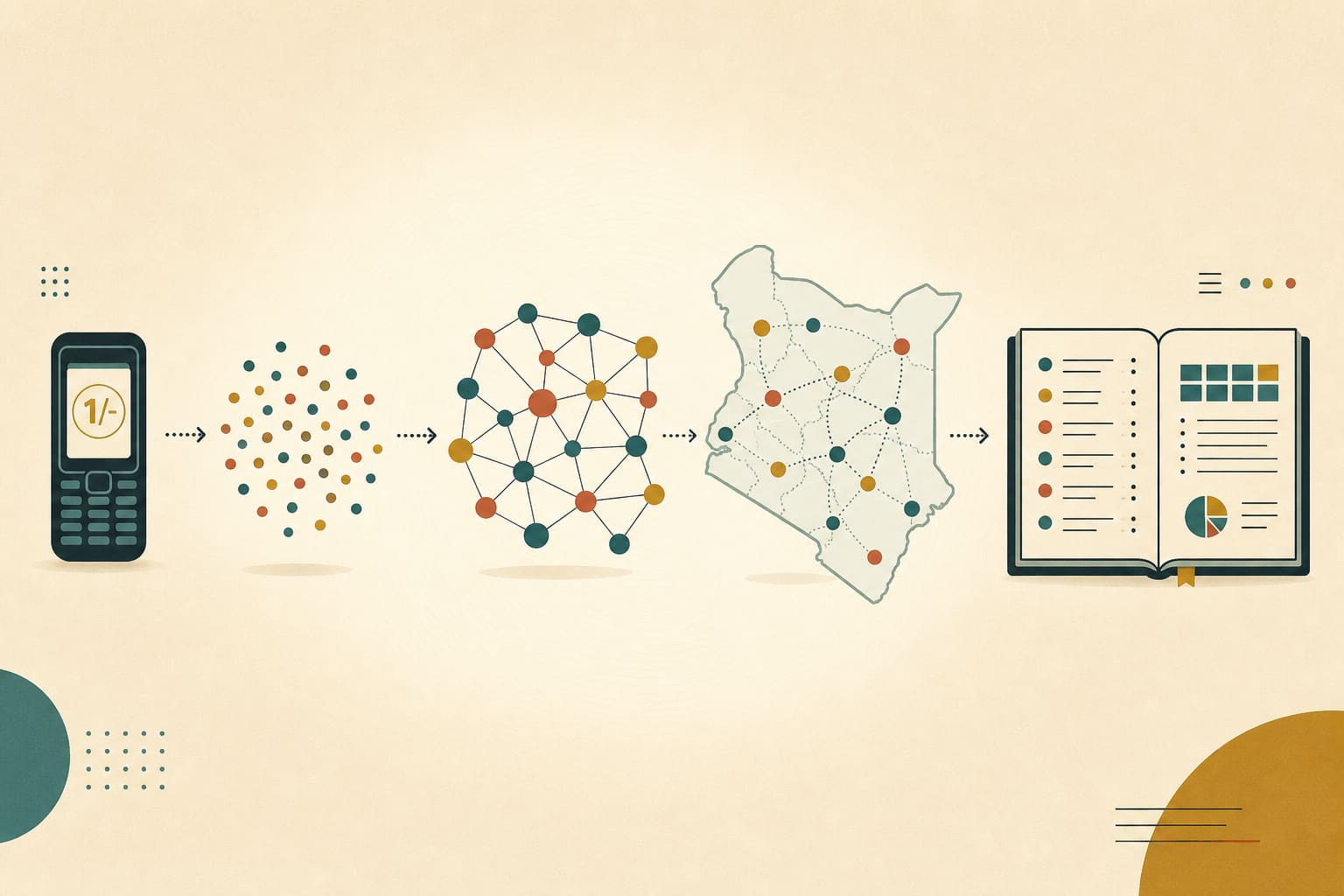
Linda Mwananchi is proving that citizens can finance and expand a political movement through small contributions and digital networks. Its deeper test is whether it can convert a crowd into a transparent, citizen-governed institution capable of restraining, and surviving, its most popular leaders.
In Part I, electoral boundaries shape the coalitions politicians must build. In Part II, Sifuna’s political moment faces a harder test: can a moment become a civic movement? This essay turns to the machinery gathering around that moment, registration, referral, crowdfunding, digital belonging, and asks whether hope can harden into institutions.
The energy is real. Small donors are sending money. Organisers are appearing outside the usual brokerage networks. Rallies and timelines are filling. That hope should not be mocked. It should be protected by design.
The central question is not whether Sifuna will run for President.
Can Linda Mwananchi transform a digitally connected crowd into a citizen-governed political institution, or will it become a cheaper, faster and more data-rich version of Kenya’s familiar leader-centred politics?
At a Glance
Already visible: financially accessible participation; small-donor mobilisation; organiser identification beyond conventional brokers; digital activity meeting physical meetings; a recognisable civic narrative.
Still unproven in public: enforceable membership rights; independently reviewable expenditure; durable local chapters; protected dissent; data rights that survive transfer to a party; institutions strong enough to constrain popular leaders.
Working diagnosis: digital following + fundraising network + mobilisation vehicle + emerging civic movement. Not yet, by public proof, a completed citizen-owned institution.
Evidence limits: fundraising totals below are dated public claims, not audited ledgers. Registration scale should be read through the movement’s own platform language, not as independently verified national demography.
The One-Shilling Citizen
Begin with the smallest reported contribution. When Nairobi Senator Edwin Sifuna unveiled Paybill 3033049 in July 2026, public appeals often asked for Sh10. Reporting on the first day also noted a lowest recorded gift of one shilling.
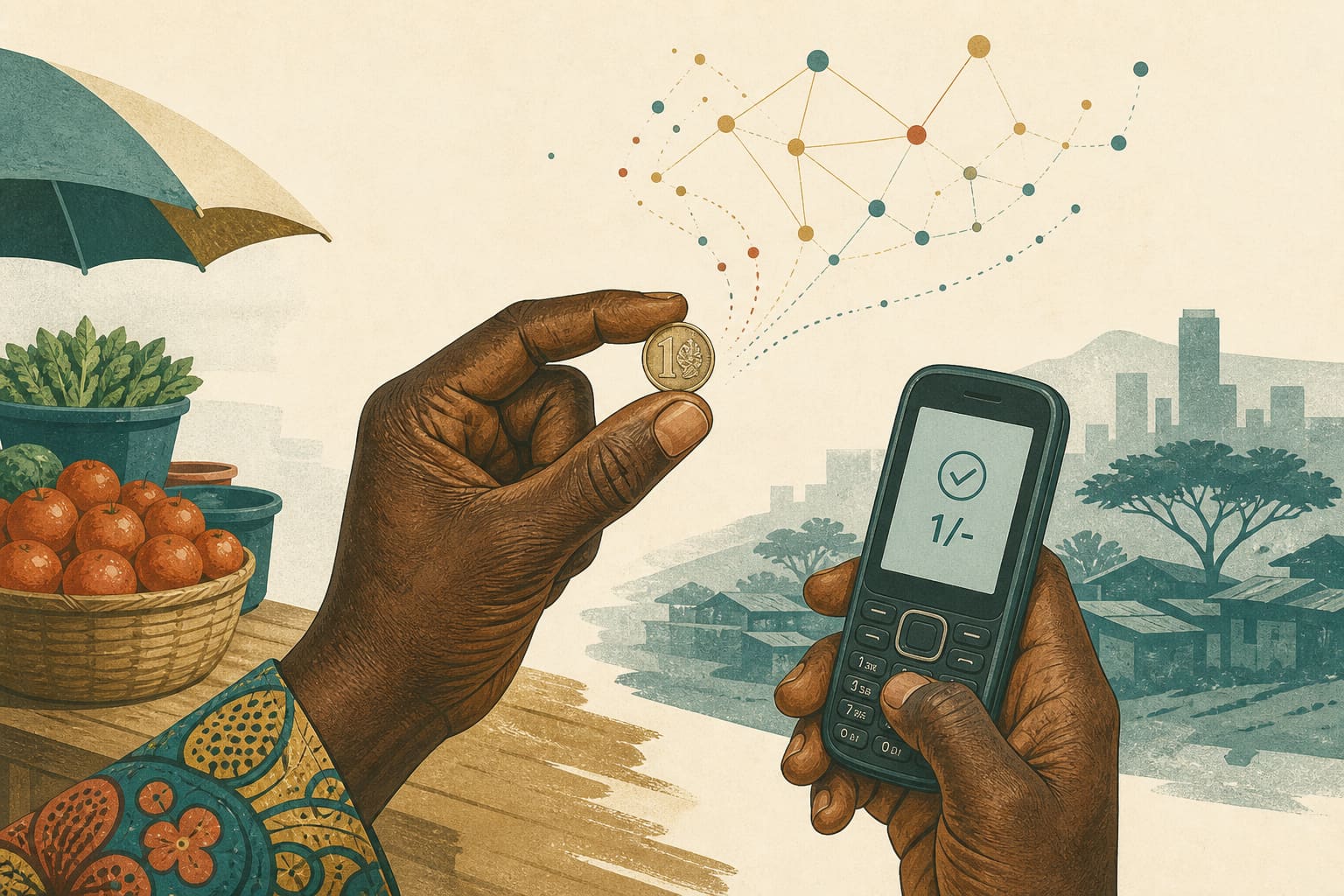
One shilling cannot hire a public-address system.
It cannot fuel a campaign vehicle, print posters or feed travelling organisers.
Leaders have said a major rally can cost around Sh2.5 million. Against that number, a single shilling looks absurd. Its political meaning is not.
Picture the composite scenes public reporting already suggests: a market trader who can spare Sh10 after a slow morning; an elder who presses a worn note into an organiser’s hand at a roadside stop; a young worker who sends mobile money at midnight because the meeting video felt like recognition. These are not invented interviews. They are the kinds of participation the movement invites Kenyans to perform.
The monetary value of a gift and the democratic value of a gift are different things. Money pays for logistics. A contribution can also announce membership. Feeling ownership, however, is not the same as holding enforceable rights.
If small contributions are invited as proof of equality, the organisation must show what equality means after the money arrives.
Kenya Did Not Import the Crowd
Kenya did not discover collective contribution on a Silicon Valley dashboard. Harambee taught communities to gather labour, food, school fees and political support through shared contribution long before movement websites.
Harambee has two faces. One is solidarity. The other is capture: patronage, coercion dressed as duty, or spectacle that flatters the powerful while ordinary people absorb the cost.
Contemporary political crowdfunding inherits both. It can democratise finance. It can also become a digital Harambee in which the crowd pays, the leader decides, and the ledger remains private.
From Ushahidi to Gen Z to Linda Mwananchi
Kenya’s civic crowdsourcing genealogy should not be flattened. Ushahidi crowdsourced testimony and crisis information. Gen Z networks crowdsourced education, logistics, mutual aid and evidence under pressure. Linda Mwananchi is attempting something adjacent and different: to crowdsource a political constituency and an institutional base.
Elsewhere, digital crowds have repeatedly shown the same fork in the road: they can produce public knowledge, or they can become loyalty machines with better dashboards. The Kenyan question remains local. What does the interface reward? What does it hide?
Platforms teach politics through what they make easy, share, register, refer, donate, appear on a leaderboard, and through what they make difficult: dissent, deletion, minority reports, slow deliberation, and verifying a local claim before it becomes a national slogan.
“Kwani Tuko Wangapi?” Measures Scale, Not Sovereignty
On the Linda Mwananchi website, the phrase operates as roll call, invitation and challenge. Registration is a political performance: I exist. I recognise this community. I consent to be counted.

Being counted is not the same as having decision-making rights.
“Kwani Tuko Wangapi?” may measure scale, but it does not yet prove sovereignty.
- Does registration create enforceable membership rights?
- May members propose policy, and see what happened to their proposals?
- Can they vote, recall leaders, or inspect expenditure?
- Can they challenge nominations?
- Can they leave and delete or export their political data?
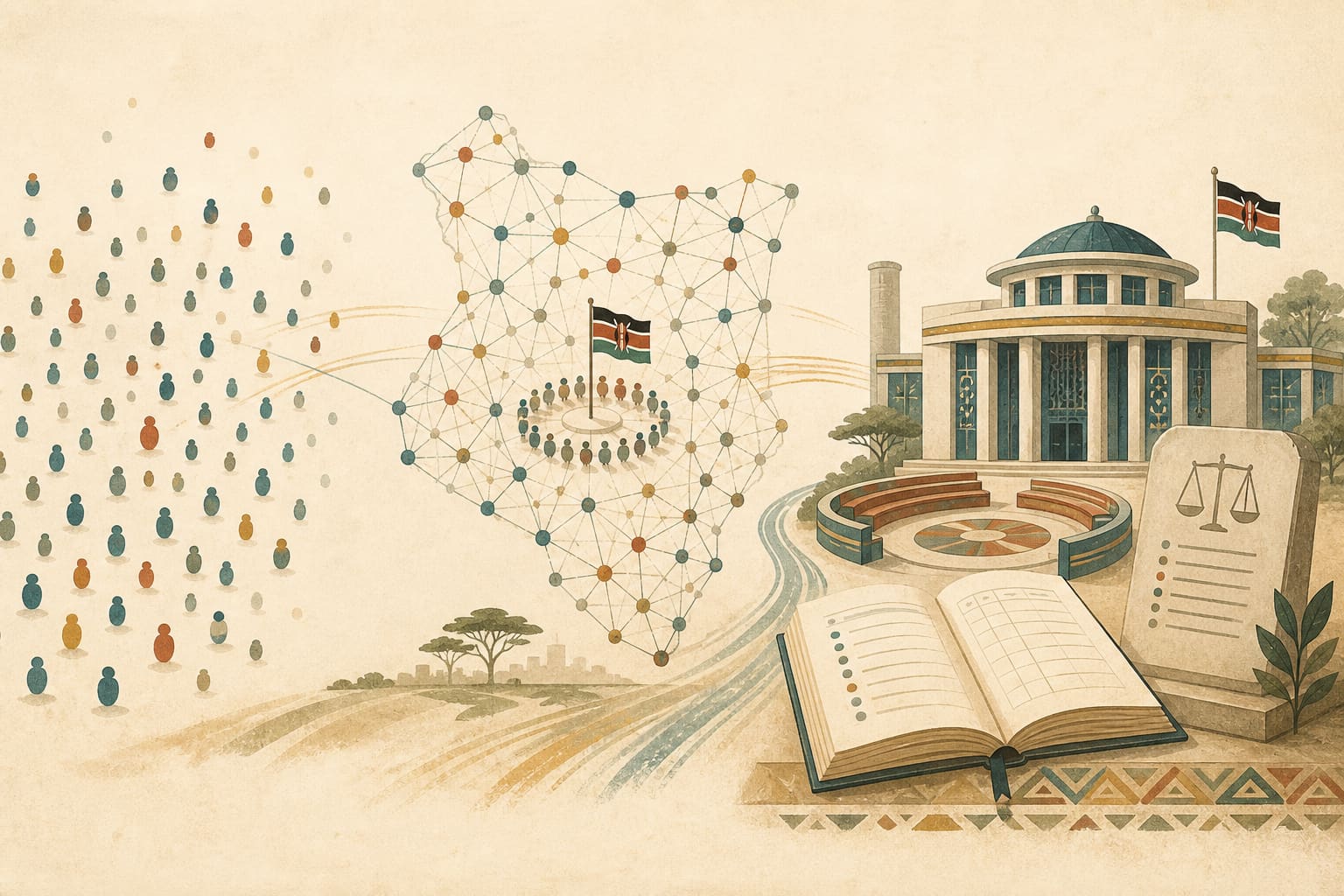
Crowd
- Attention and belonging without durable rights
- Counts people; rarely binds decisions
- Can disperse as quickly as it gathers
Movement
- Shared story, organisers and repeated action
- Online energy begins meeting offline work
- Still vulnerable to personality capture
Institution
- Membership rights, ledgers and recall
- Decisions survive disagreement with founders
- Citizens can inspect money, data and nominations
A Political Participation Stack
The public interface suggests a stack more sophisticated than a hashtag and less complete than democratic governance:
- Story
- Registration
- Referral
- Recognition
- Volunteering
- Contribution
- Rally
- Local organisation
- Deliberation
- Accountability
Story, registration, referral, recognition, volunteering, contribution and rallies can mobilise. Deliberation and accountability decide whether the stack becomes citizen power or efficient mobilisation.
A movement website is a draft constitution written in code. What it counts, rewards, publishes and withholds tells citizens what the organisation believes matters.
Genuine crowdsourcing distributes more than slogans: problem identification, translation, verification, facilitation, monitoring, candidate assessment and expenditure scrutiny. Symbolic consultation invites comments, harvests legitimacy, and keeps consequential decisions private.
Crowdfunding Changes Who Is Owed
Concentrated financing creates concentrated obligations. Many small donations can, in principle, distribute ownership. That is the democratic promise Linda Mwananchi is publicly selling.
Reported early results were striking as moments, not permanent balances. The Star reported about Sh2.21 million within 36 hours of the paybill’s unveiling. People Daily later reported Sifuna saying collections stood near Sh6.5 million by 28 July 2026. Read those as dated claims, not a completed audit.
Because the movement is not yet a registered party, the fundraising account appears under Sifuna’s official name. Practical necessity is also institutional warning. Personal custody of collective money is familiar Kenyan politics. It is not yet citizen custody.
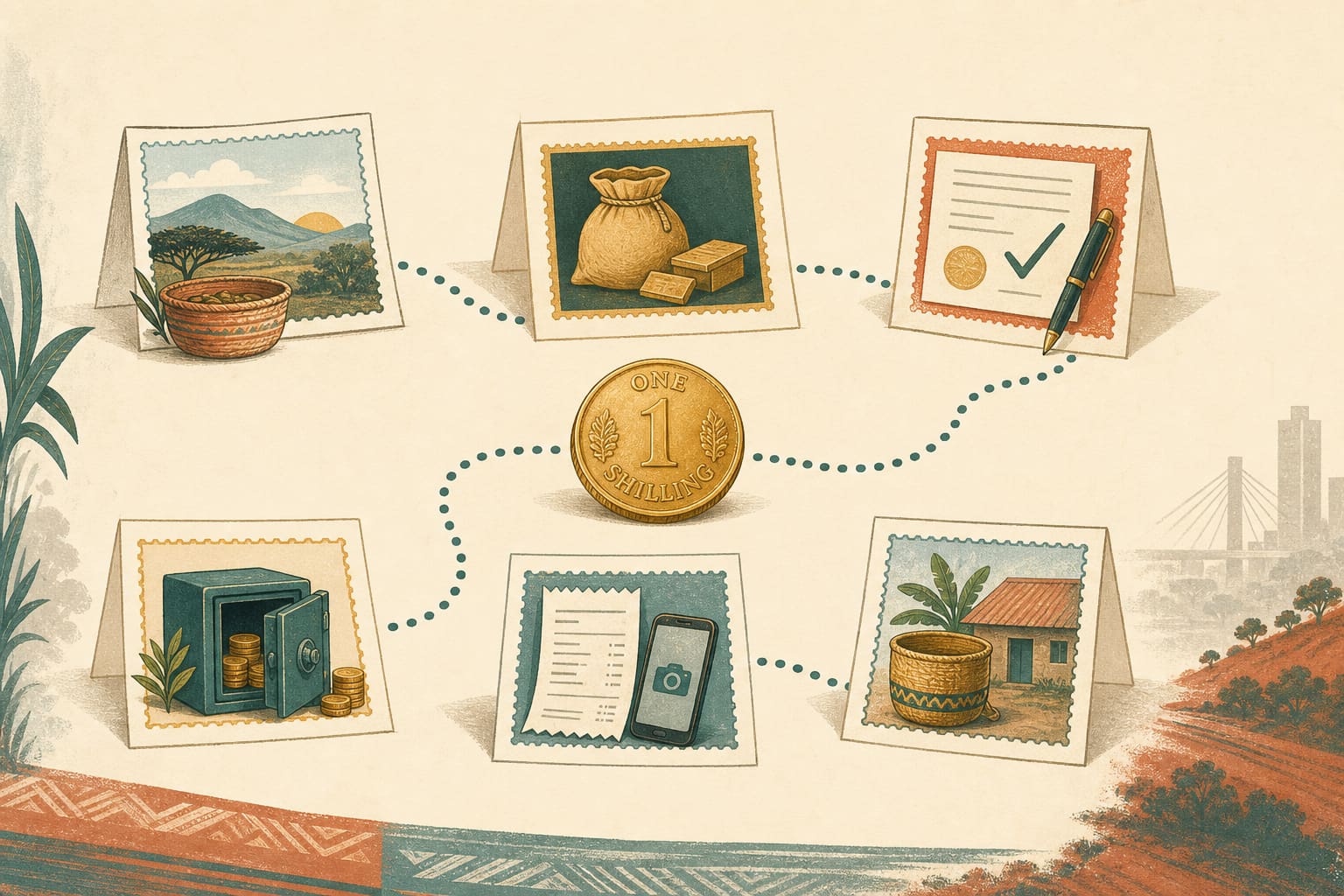
Every shilling should have a public biography.
Source
Where did the shilling come from?
Assignment
What was it assigned to fund?
Authorisation
Who approved the expenditure?
Recipient
Who received the money or service?
Evidence
What record verifies the spend?
Balance
What remains, and who can see it?
Where did it come from? What was it assigned to? Who authorised it? Who received it? What evidence verifies the spend? What remains? Financial transparency alone does not prove democratic legitimacy. Without it, citizen ownership is theatre.
Referral Networks Are Not Yet Democratic Networks
The Movement Builders Leaderboard can identify emerging organisers and broaden participation beyond traditional brokers. It can also become a patronage pyramid dressed as gamification: fake registrations, quantity over quality, urban virality mistaken for national legitimacy.
Imagine the organiser the dashboard may undervalue: someone in a secondary town who translates registration into a church-hall listening session, walks elders through a form, mediates a quarrel before a meeting collapses, and never climbs a leaderboard because relational work is slow. That labour is movement building. A democratic network must learn to count it.
The Data Is Also Political Power
Names, phone numbers, location, volunteering interests, donation history and referral ties can organise citizens. The same fields can expose them to surveillance, profiling or retaliation.
Nothing in the public reporting reviewed here establishes that Linda Mwananchi has violated Kenya’s data-protection law. The point is prior to scandal: political data requires political care, minimisation, plain-language consent, access logs, deletion and export rights, retention limits, breach procedures, vendor controls, and renewed consent before any transfer to a party.
Offline Kenyans must not become second-class members. A paper attendance sheet, a radio listener, a cash contribution through a neighbour, these are still wananchi. If the database cannot see them, the movement’s map of Kenya is already distorted.
The Crowd Is Not Always Right
Crowds can democratise. They can also punish dissent, reward outrage, exclude minorities and mistake virality for evidence.
Distinguish malicious disinformation, legitimate investigation, internal dissent, satire, ordinary error, and criticism that is uncomfortable but accurate. Conflating those categories is itself a form of power.
From Sifuna’s Moment to the Mwananchi’s Institution
Edwin Sifuna is central to the movement’s current visibility. That is a fact of attention, not a brief for cult or denunciation. He has emphasised small-donor financing, denied dependence on a single wealthy sponsor, and said he wants to tour the counties before answering whether he will contest the presidency. Those statements matter. They are still not a constitution.
A following waits for Sifuna to decide.
An institution determines how decisions will be made, including decisions with which Sifuna may disagree.
The movement should be strong enough to tell its most popular leader “no.”
That test includes awkward futures: declining to contest, losing, leaving, or being disciplined. An organisation that collapses under any of those conditions was never an institution. It was hope concentrated around a person.
The Missing Bridge: 290 Civic Laboratories
Part I asked Kenya to rethink constituencies as lived geographies. Part II asked whether a national candidate can pass local civic tests. The bridge is practical: treat constituencies as laboratories for Constituency Civic Compacts around markets, mobility, schools, healthcare, water, housing, enterprise, digital access, agriculture, pastoral systems, fishing, sanitation and public safety.
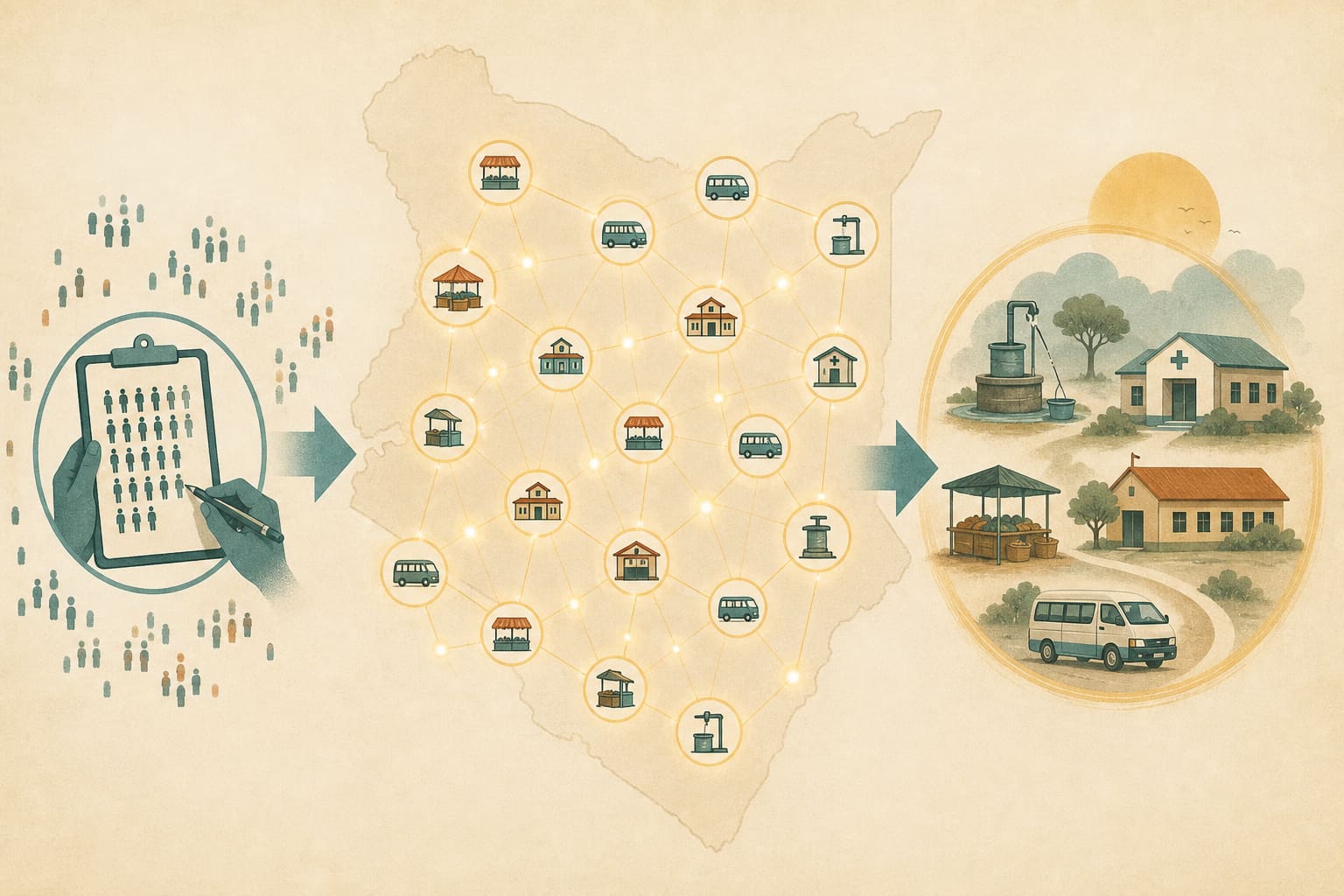
No compact should rank candidates or ethnic communities. Each should name shared priorities, evidence, affected groups, minority safeguards, responsible institutions, milestones and verification methods.
Minimum Viable Democratic Infrastructure
A complete civic operating system cannot be built in a week. The 2027 calendar creates a real trade-off between speed and integrity. The answer is not to abandon institutions. It is to sequence them.
Over the next six to twelve months, four public commitments would already change the character of the movement:
Public Money Ledger
Publish contributions, in-kind support, approved spends, vendors and balances using the six-part biography already proposed.
Provisional Membership Rights
State, even in draft form, what registration confers: proposal rights, inspection rights, exit and data rights.
Dissent Channel
Create a minority-report and appeals path that does not treat internal criticism as betrayal.
Data and Offline Inclusion
Publish plain-language consent, retention rules, and a route for citizens without smartphones to count as members.
| Priority | What to publish first |
|---|---|
| Public Money Ledger | Publish contributions, in-kind support, approved spends, vendors and balances using the six-part biography already proposed. |
| Provisional Membership Rights | State, even in draft form, what registration confers: proposal rights, inspection rights, exit and data rights. |
| Dissent Channel | Create a minority-report and appeals path that does not treat internal criticism as betrayal. |
| Data and Offline Inclusion | Publish plain-language consent, retention rules, and a route for citizens without smartphones to count as members. |
These priorities acknowledge hard constraints: personal custody of funds while the formation remains unregistered; the visibility a popular leader brings; the temptation to postpone rights until after victory. Postponed rights tend to arrive as decorations.
Design Brief: A Civic Operating System
Beyond the minimum, a fuller design brief remains useful, not as a claim that these institutions already exist, but as a checklist organisers, donors and journalists can use.
| Institution | What should be public | Democratic purpose |
|---|---|---|
| Movement Constitution | Membership rights, decision rules, leadership terms, recall and dispute resolution | Converts supporters into rights-bearing members |
| Public Money Ledger | Contributions, in-kind support, expenditure, vendors, approvals and balances | Converts crowdfunding into accountable finance |
| Open Ideas Ledger | Proposals, evidence, status, decisions and reasons | Converts consultation into traceable citizen authorship |
| Constituency Civic Compacts | Shared local priorities, safeguards, milestones and indicators | Connects national politics to lived geography |
| Democratic Candidate System | Eligibility, declarations, campaign rules, votes and appeals | Reduces capture by money and personality |
| Political Data Trust | Data inventory, consent, retention, access and breach protocols | Protects political information |
| Dissent and Minority Mechanism | Minority reports, appeals and protection from retaliation | Prevents majoritarian capture |
| Succession Framework | Term limits, rotation, deputy structures and handover procedures | Enables survival beyond founders |
Movement Constitution
- What should be public
- Membership rights, decision rules, leadership terms, recall and dispute resolution
- Democratic purpose
- Converts supporters into rights-bearing members
Public Money Ledger
- What should be public
- Contributions, in-kind support, expenditure, vendors, approvals and balances
- Democratic purpose
- Converts crowdfunding into accountable finance
Open Ideas Ledger
- What should be public
- Proposals, evidence, status, decisions and reasons
- Democratic purpose
- Converts consultation into traceable citizen authorship
Constituency Civic Compacts
- What should be public
- Shared local priorities, safeguards, milestones and indicators
- Democratic purpose
- Connects national politics to lived geography
Democratic Candidate System
- What should be public
- Eligibility, declarations, campaign rules, votes and appeals
- Democratic purpose
- Reduces capture by money and personality
Political Data Trust
- What should be public
- Data inventory, consent, retention, access and breach protocols
- Democratic purpose
- Protects political information
Dissent and Minority Mechanism
- What should be public
- Minority reports, appeals and protection from retaliation
- Democratic purpose
- Prevents majoritarian capture
Succession Framework
- What should be public
- Term limits, rotation, deputy structures and handover procedures
- Democratic purpose
- Enables survival beyond founders
Before It Asks to Govern Kenya
Linda Mwananchi has already shown that participation can be made financially accessible, that small contributions can travel nationally, and that organisers can appear beyond conventional brokers. In a political economy that usually prices the poor out of influence, that is not trivial. It is hopeful.
Hope is not ownership.
Crowdsourcing becomes democratic when citizens can trace how their knowledge affects decisions. Crowdfunding becomes democratic when citizens can follow money from contribution to expenditure. Registration becomes membership when it creates enforceable rights. A rally becomes movement building when participants acquire durable institutions through which they can continue acting.
What can one-shilling citizens, organisers and local volunteers demand next?
- A living public money ledger, not only fundraising announcements.
- A provisional membership rights note attached to registration.
- A protected channel for dissent and minority reports.
- Offline inclusion routes that do not treat smartphones as citizenship.
- Local Civic Compact experiments that ask what communities share, not only how many people registered.
Parts I and II argued that maps and candidates can either enclose Kenya or reconnect it. Part III adds the organisational test. A later synthesis in this series should ask how boundary reform, candidate ethics and movement institutions must travel together if Kenya is to replace ethnic brokerage with shared civic power.
Before Linda Mwananchi asks to govern Kenya, it must demonstrate that wananchi can govern Linda Mwananchi.
Sources and further reading
- Linda Mwananchi, official website (“Kwani Tuko Wangapi?”) (accessed 2 August 2026)
- Kenya Insights: Sifuna launches Linda Mwananchi website (14 March 2026; accessed 2 August 2026)
- The Star: Sifuna unveils paybill, seeks Sh10 donations (21 July 2026; accessed 2 August 2026)
- Nairobi Leo: Linda Mwananchi raises over KSh500k in 1 day (reports KSh 1 lowest gift) (accessed 2 August 2026)
- The Star: Linda Mwananchi paybill raises Sh2.2 million in 36 hours (23 July 2026; accessed 2 August 2026)
- People Daily: Sifuna reveals amount raised through Linda Mwananchi paybill (accessed 2 August 2026)
- The Star: Sifuna: I will tour 47 counties before deciding on 2027 bid (21 July 2026; accessed 2 August 2026)
- Office of the Registrar of Political Parties: Political Parties Act (2022 edition) (accessed 2 August 2026)
- IEBC / Kenya Law: Election Campaign Financing Act materials (accessed 2 August 2026)
- Office of the Data Protection Commissioner, official site (accessed 2 August 2026)
- ThePortal: The Map Is Also a Ballot (Part I)
- ThePortal: The Candidate Is Also a Map (Part II)
From reading to civic action
Participation quality matters more than volume. Use learning resources or the governance console for explainable decision review.
Improve this article
Ask a question, suggest a correction, submit a source, share experience, or propose a topic. Contact details stay private. Publicly consequential allegations need editorial review.