The Map Is Also a Ballot: Rethinking Kenya’s Constituencies to Defeat Negative Ethnicity
Part I of The Map Is Also a Ballot
Main argument. Constituency boundaries can reinforce ethnic fortresses or encourage civic coalitions, so the map itself is part of the ballot.
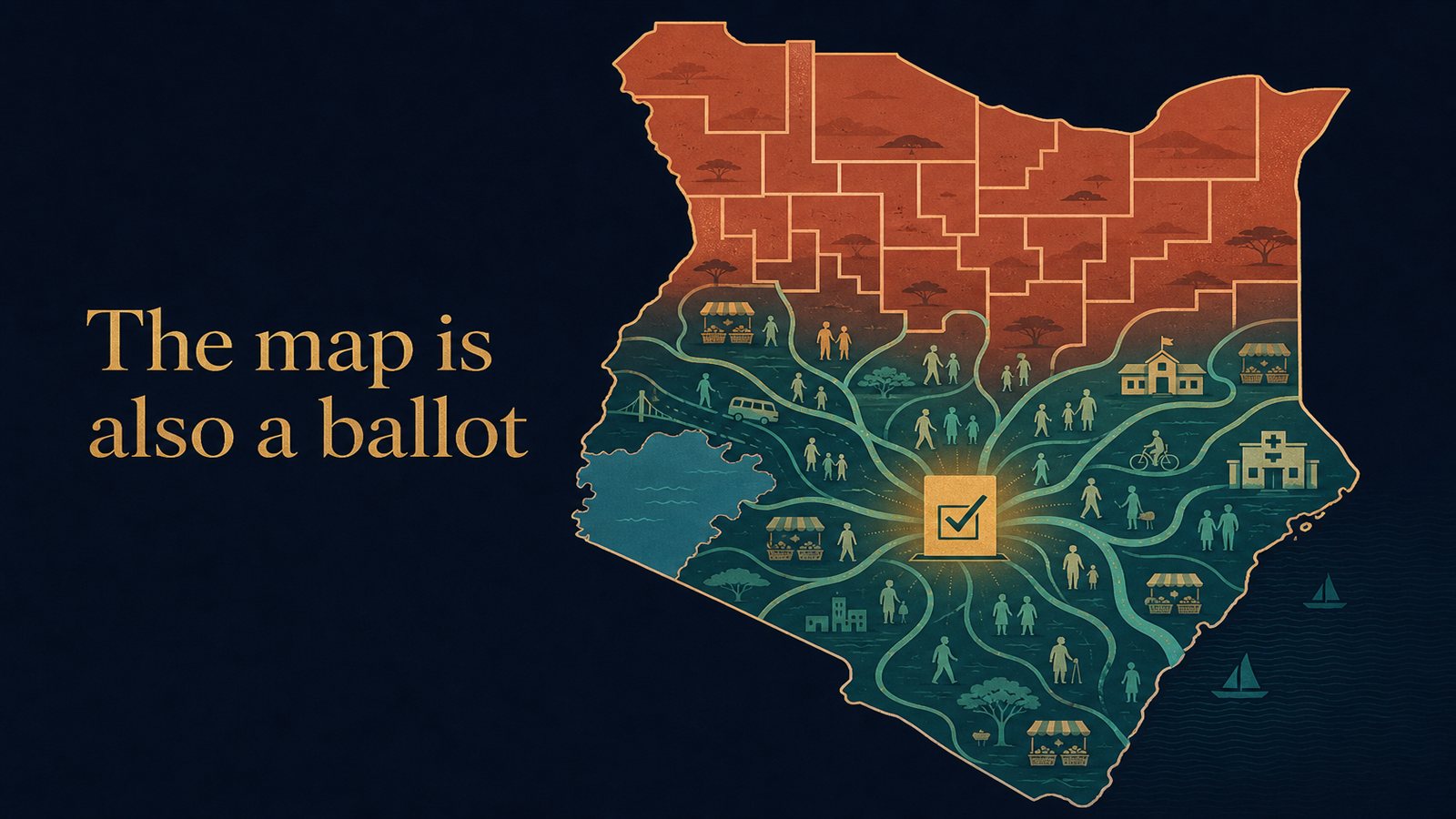
On an ordinary morning in a Kenyan town, the country works remarkably well.
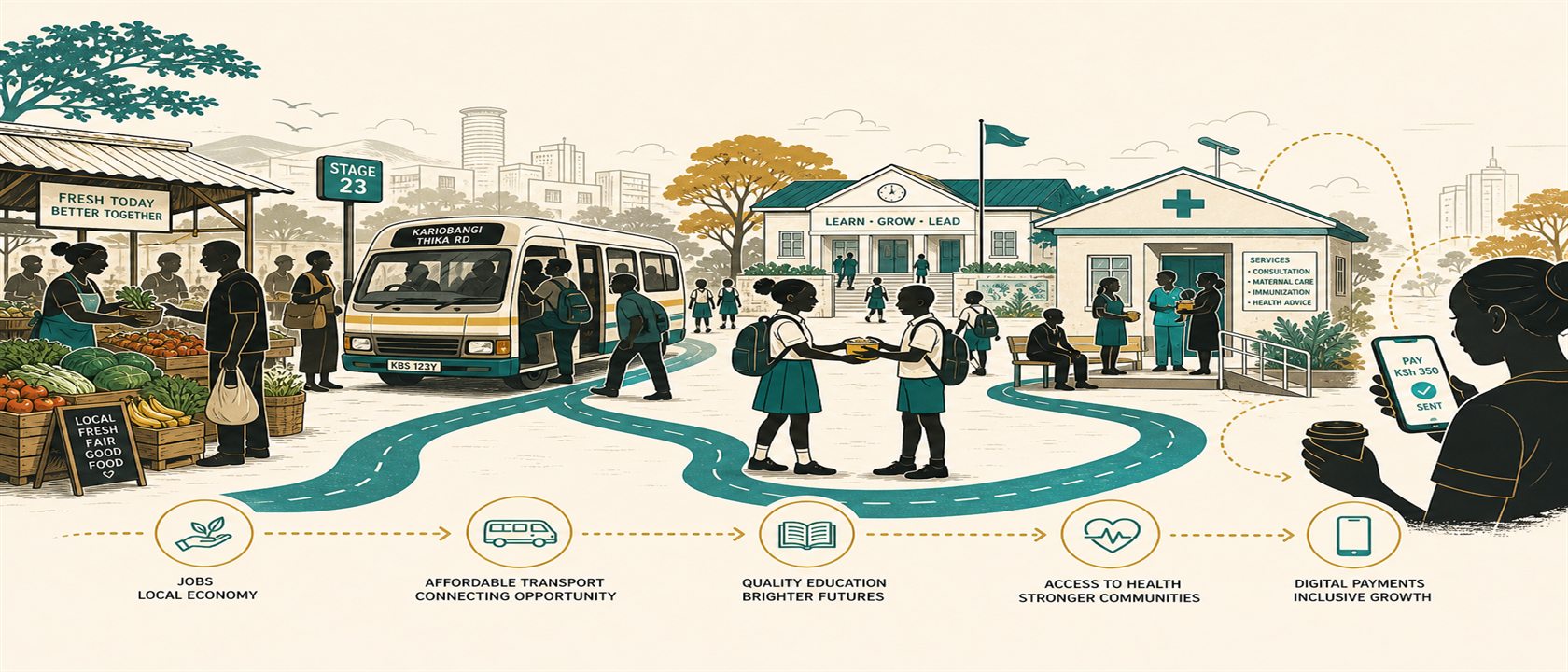
A trader buys vegetables from one county, obtains transport from another community, receives payment through a national digital network and sells to customers whose surnames she may never ask. At the hospital, patients wait together. In the matatu, passengers complain about the same fuel prices. At school, children exchange food before they learn which communities are expected to distrust each other.
Then election season arrives.
The trader becomes a member of a voting bloc. The neighbour becomes an outsider. The surname becomes a political forecast. The constituency, which should be a democratic meeting place, is described as someone’s “bedroom,” “stronghold” or ancestral possession.
Kenya does not suddenly become ethnic during elections. Political competition activates, organises and weaponises identities that were already present.
That is why we must rethink our electoral constituencies.
Ethnicity Is Not the Enemy
We must begin with an important distinction: ethnicity is not the problem.
Ethnicity gives us language, memory, philosophy, food, music and belonging. Negative ethnicity begins when this belonging is converted into fear, entitlement, exclusion or collective punishment. It tells citizens:
“Unless one of our own wins, we will be unsafe, forgotten or denied development.”
This fear is not entirely imaginary. Kenya’s political history has often connected proximity to power with access to appointments, infrastructure and economic opportunity. The Waki Commission found that the belief that the presidency benefits the President’s ethnic community, together with inequalities interpreted through ethnic geography, contributed to the conditions surrounding the 2007-2008 violence. It also documented how political and economic grievances were transformed into attacks against people because of their presumed ethnic and political associations.
Negative ethnicity is therefore not merely a cultural attitude. It is a political incentive system.
Constituencies Are Not Neutral Containers
A boundary does more than determine where we vote. It influences whom candidates must persuade, which interests receive attention and who is considered a legitimate local leader.
When a constituency closely resembles an ethnic enclosure, a candidate may not need a serious economic programme. Securing the dominant community’s endorsement can be enough. Political competition then shifts from:
“What will you do for this constituency?”
to:
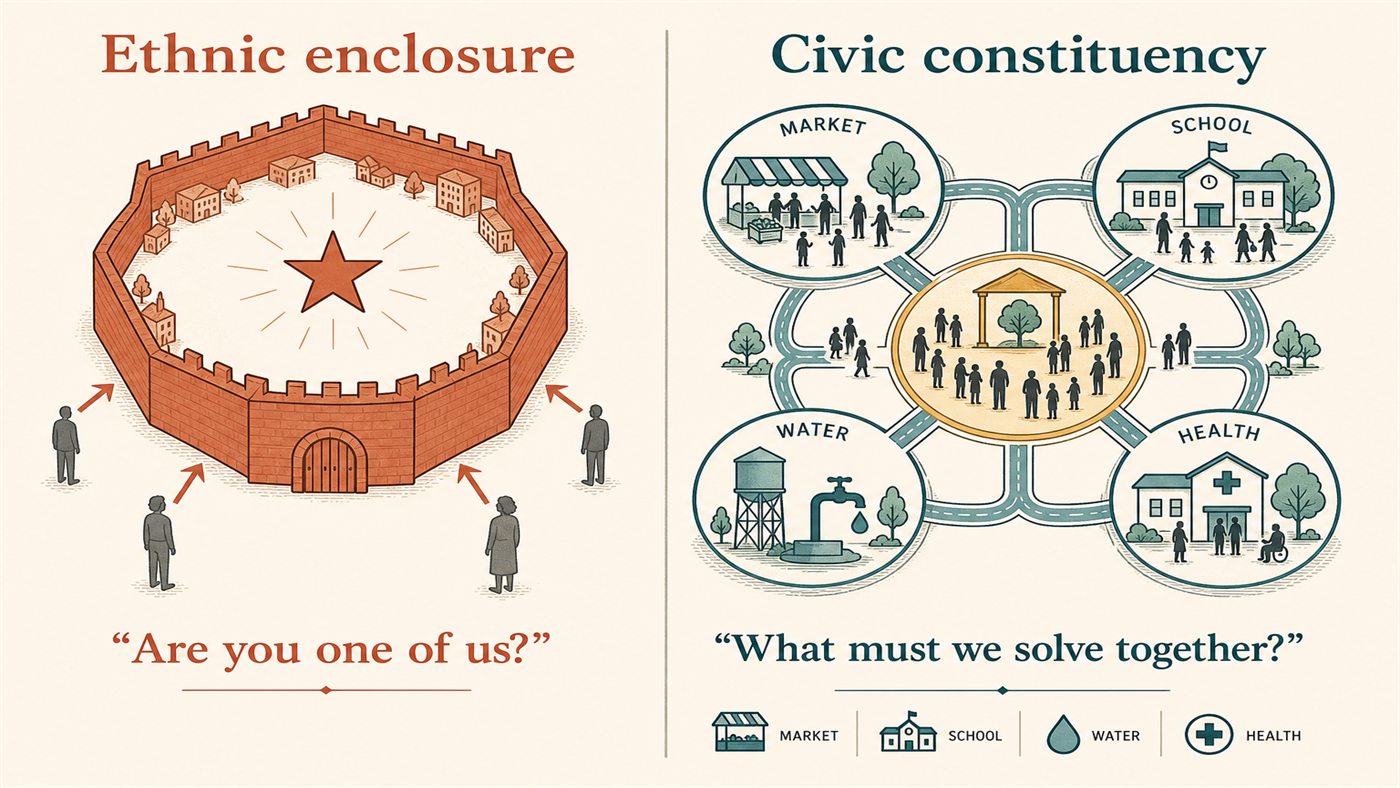
“Are you one of us?”
The seat gradually acquires an ethnic identity. Residents from other communities may live, invest and pay taxes there for decades but remain politically classified as guests.
Boundaries do not merely describe communities. They can teach citizens who is expected to belong together.
Conceptual comparison. Left panel, Ethnic enclosure: rigid boundary walls, one dominant political voice, residents at the edges appear unheard, campaign messages flow inward toward a narrow identity, asking “Are you one of us?” Right panel, Civic constituency: interconnected neighbourhoods share roads, markets, schools, water and health services; several voices converge on common priorities, asking “What must we solve together?”
Follow the Geography of Everyday Life
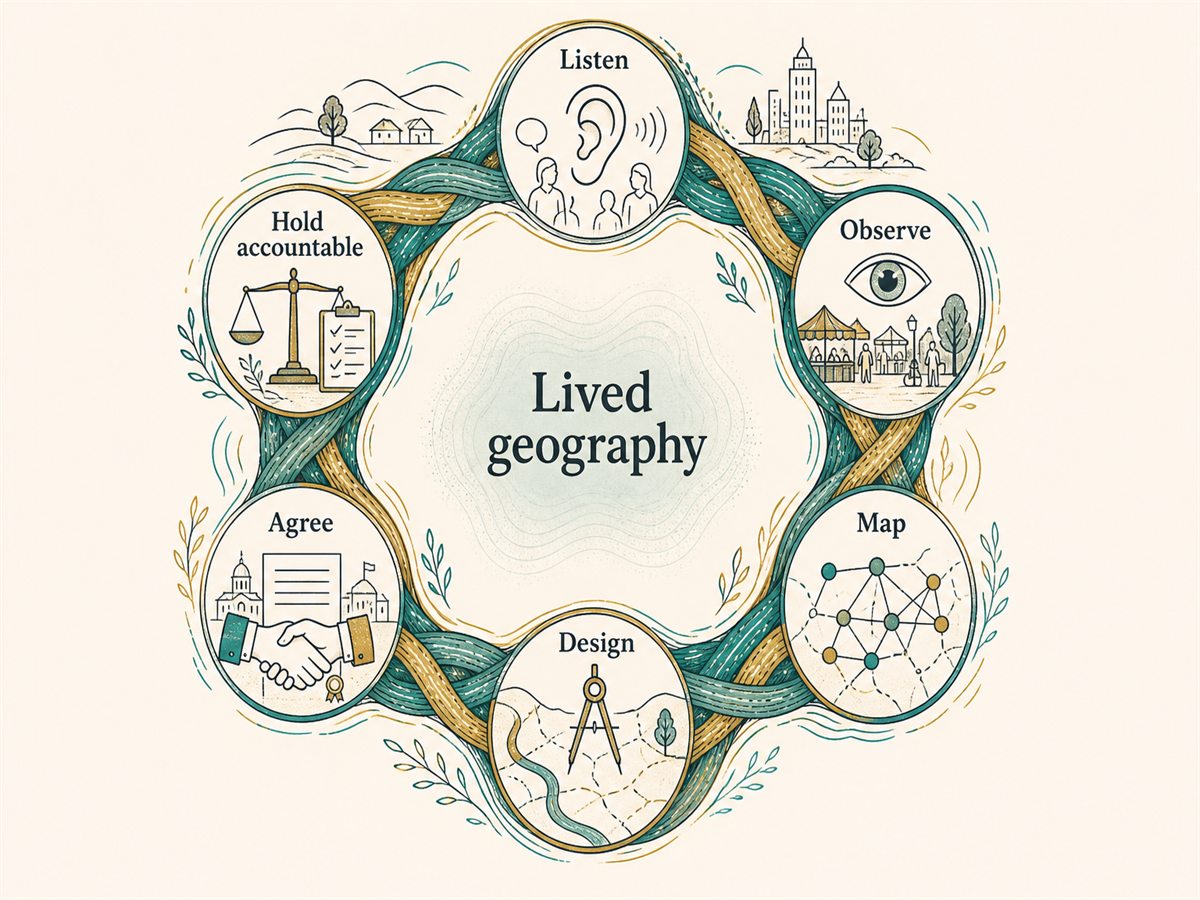
An ethnographic approach would begin before anyone touches the electoral map.
Researchers should spend time in markets, transport corridors, schools, workplaces, places of worship, hospitals and informal settlements. They should ask:
- Where do residents actually work and trade?
- Which communities share water sources, roads and markets?
- Where do children attend school?
- Which hospital serves the surrounding population?
- How do people commute?
- What conflicts do residents face together?
- Which public problems cross existing boundaries?
This would reveal Kenya’s lived constituencies: communities created by economic interdependence rather than political ancestry.
A vegetable market may connect farmers, transporters, traders and consumers from several counties. A transport corridor may create common interests among pastoralists, farmers, urban workers and small businesses. An informal settlement may contain many ethnic identities but one shared struggle for sanitation, housing, security and dignified work.
These common problems can become the foundation of civic constituencies.
What Constitutional Reform Already Allows
Kenya does not need to begin from a constitutional vacuum.
Constitution of Kenya, Article 89 requires constituency boundaries to consider population equality, geographical features, urban centres, community interests, historical, economic and cultural ties, and means of communication. It also provides flexibility for cities, sparsely populated areas and other circumstances. The boundaries must be reviewed at intervals of between eight and twelve years.
The Constitution therefore already permits us to look at economic ties and communities of interest. What must change is how we interpret those ideas.
“Community of interest” should not automatically mean “community of ancestry.” It should include people who share a market, transport system, environmental resource, employment zone or public-service network.
However, the Constitution currently fixes the number of constituencies at 290, a limit the IEBC reaffirmed in January 2026. Rethinking constituencies must consequently focus first on names, boundaries, representational quality and political incentives. Creating additional constituencies would require a constitutional change.
The Idea of a Civic Constituency
A civic constituency would not be drawn to manufacture an arbitrary ethnic mixture. That would risk gerrymandering and could weaken minority representation.
Instead, it would be designed around three principles.
Shared life
Boundaries should, where constitutionally and geographically practical, bring together people who depend on the same economic and social systems.
Protected voice
Minority, indigenous, pastoralist and marginalised communities must not be divided merely to produce attractive diversity statistics.
Shared accountability
Every candidate should be required to explain how their programme serves all wards, settlements and communities within the constituency.
The objective is not to force people to abandon identity. It is to make political success depend on building bridges between identities.
Boundaries Alone Will Not Save Us
We must be honest about the limits of electoral cartography.
A diverse constituency can still elect an ethnic chauvinist. A homogeneous constituency can elect a nationally minded leader. Politicians can import national ethnic narratives into places where neighbours previously lived peacefully.
Boundary reform must therefore be accompanied by:
- transparent and competitive party nominations;
- public disclosure of constituency-level inequalities;
- civic debates organised around measurable local problems;
- protection against minority vote dilution;
- equitable allocation of public resources, regardless of voting patterns;
- strong enforcement against hate speech and electoral intimidation;
- consideration of longer-term electoral reforms that reward parties for securing genuinely cross-regional support.
Every constituency should also develop a public Constituency Civic Compact: five or six priorities negotiated by residents across wards, generations, genders, occupations and communities. Candidates would then compete over how to deliver the compact, not over who possesses the most electorally useful surname.
The Constituency as a School of Nationhood
Kenya’s Constitution identifies national unity, inclusiveness, equality, protection of the marginalised and sharing of power among the country’s governing values.
A constituency should be one of the places where citizens practise those values.
Imagine a constituency where a candidate cannot win by addressing only one ethnic gathering. To succeed, the candidate must speak to farmers and traders, young people and elders, landlords and tenants, formal businesses and informal workers. The winning coalition would not be a tribe assembled by fear. It would be a public assembled around common interests.
That would not eliminate ethnicity. Nor should it.
It would reduce the political profitability of negative ethnicity.
Kenya’s challenge is not that we have many communities. Our challenge is that political entrepreneurs have repeatedly taught those communities to approach the ballot as a census of fear.
We should therefore review more than the lines on our electoral map. We must examine the social and political behaviour those lines reward.
The map is also a ballot. The way we draw constituencies influences the coalitions politicians must build, the citizens they can ignore and the stories we tell about who belongs.
Let us design constituencies that do not ask, “Which community owns this seat?”
Let them ask a more Kenyan question:
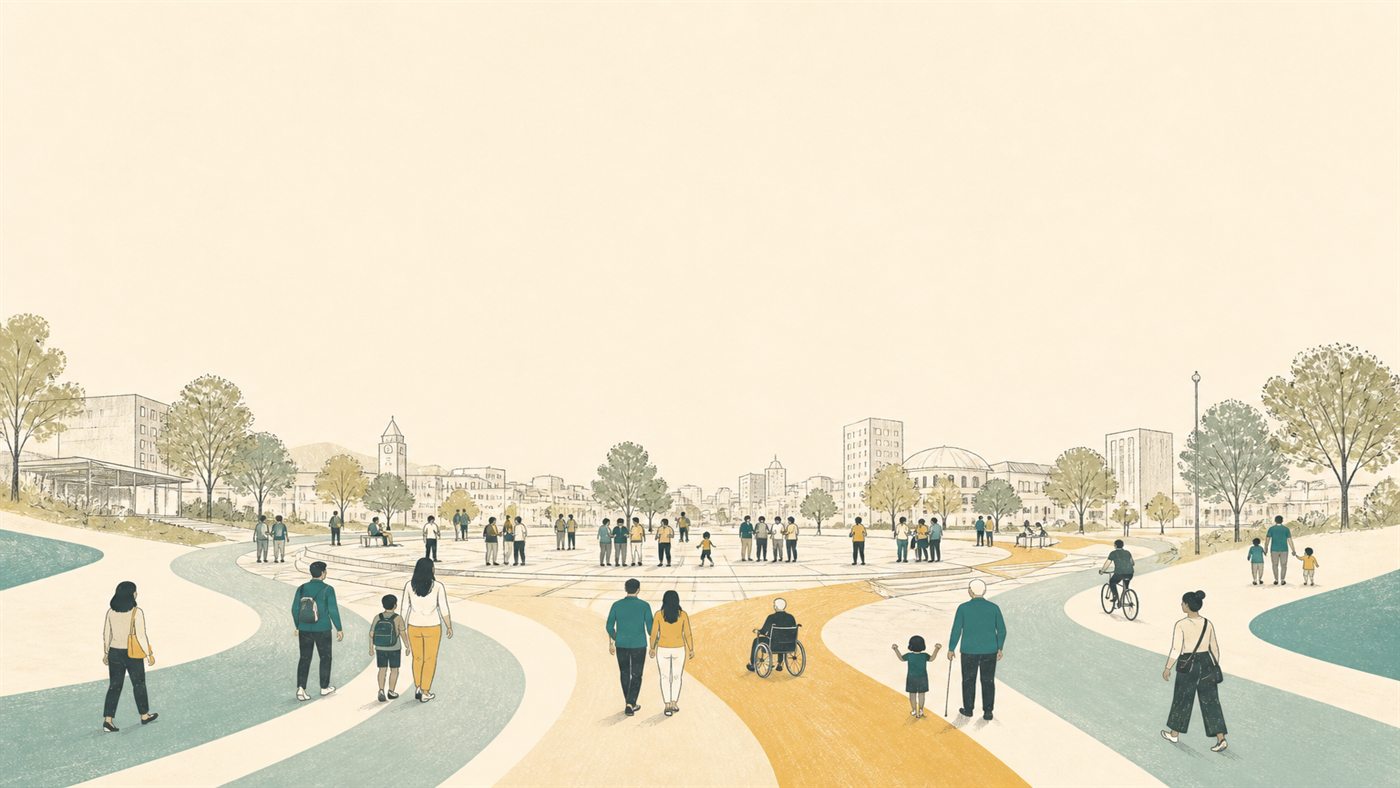
What future must we build together?
- Reflect on the question
- Participate in civic discussion
- Explore Governance and Society
From reading to civic action
Lived geography connects people before the ballot. Explore approximate places, share challenges, and help shape a Civic Compact.
Improve this article
Ask a question, suggest a correction, submit a source, share experience, or propose a topic. Contact details stay private. Publicly consequential allegations need editorial review.