Twiga Foods and the Affordable Loss Principle
How much should a startup risk to discover a scalable business model?
An analytical case commentary based on information available on 16 September 2026.
On this page
- The price of finding a model
- Affordable loss: setting the boundary
- Twiga’s opportunity and operating model
- Documented developments
- Facts, interpretation and limits
- Capital available versus loss affordable
- Proposed safeguards
- Affordable to whom?
- Preserve the capacity to experiment again
- Corporate governance simulation
- Sources
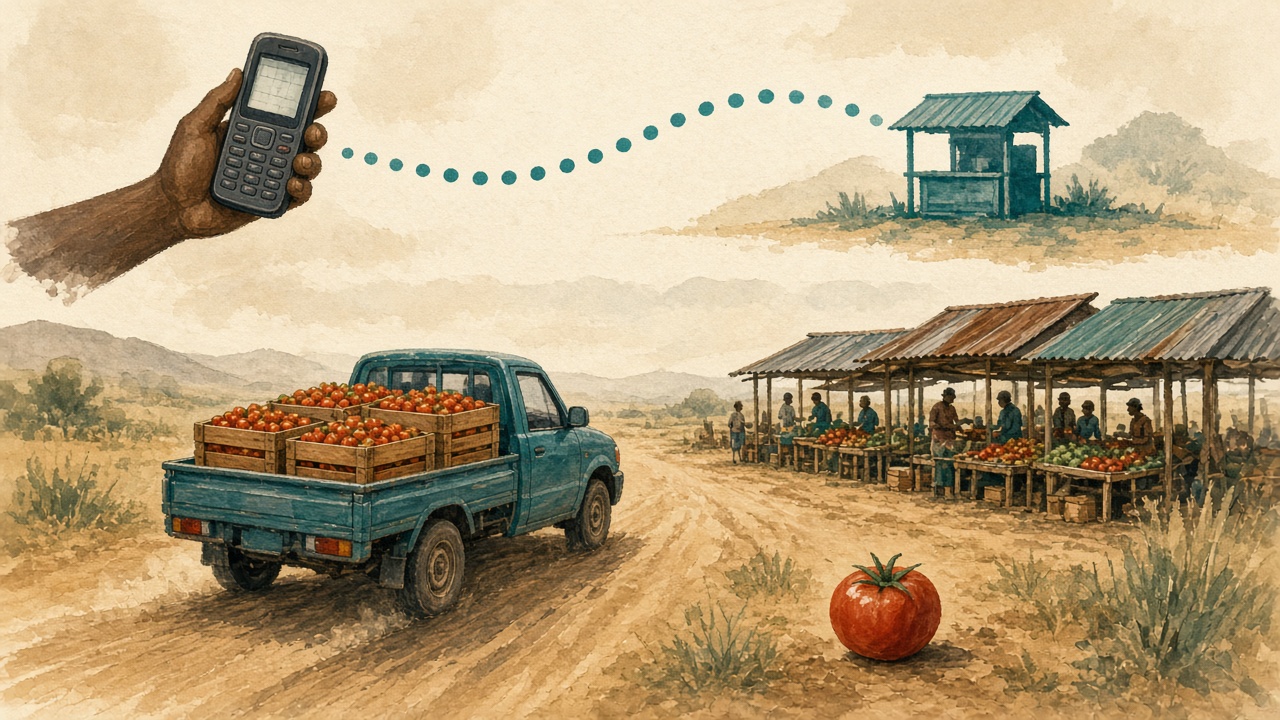
Editorial painting on ivory paper: a soft teal dotted order path above; a pickup with tomato crates on a dusty road toward stalls below. Illustrative only, not a Twiga facility or branded interface.
The price of finding a model
Every ambitious venture faces the same tension. Give an idea enough resources to prove itself, and you risk discovering that the enterprise can no longer absorb a disappointing result. Starve the idea, and you may never learn whether the model could have worked.
How much should we commit before we know enough?
That question sits at the centre of Steve Blank’s first-principles account of a startup: an organisation formed to search for a repeatable and scalable business model. The organisation undertakes the search. The idea is the proposition being tested. Twiga Foods, a Kenyan food-distribution venture founded in 2014, offers a public case through which to examine uncertainty, commitment and learning when the search runs through fresh produce, logistics and working capital.
Affordable loss: setting the boundary
In Saras Sarasvathy’s effectuation theory, the affordable loss principle asks entrepreneurs to decide what they are willing to lose rather than what they expect to make. The boundary covers money, time, operational commitments and, critically, the capacity to experiment again after a setback.
Willingness and ability both matter. A founder may be willing to stake more than the venture can absorb. A board may have capital available that it cannot responsibly expose without destroying the option to learn. Affordable loss is therefore not an expected-return calculation in reverse, not ordinary cost cutting, and not a universal requirement to spend as little as possible. Substantial investment can still sit inside affordable loss when exposure is consciously bounded and supportable.
Clay basin in a chalk circle on ivory paper, water only to a chalk waterline. Teal and ochre. Metaphor for bounded exposure, not financial data.

Twiga’s opportunity and operating model
According to an IFC project disclosure, Twiga was established in 2014 as a distributor of fresh fruits, vegetables and fast-moving consumer goods in Kenya. Through a digital platform and a logistics network, it sought to connect farmers and retail vendors, raising availability, affordability and accessibility of food.
An order can travel digitally.
A tomato must travel physically.
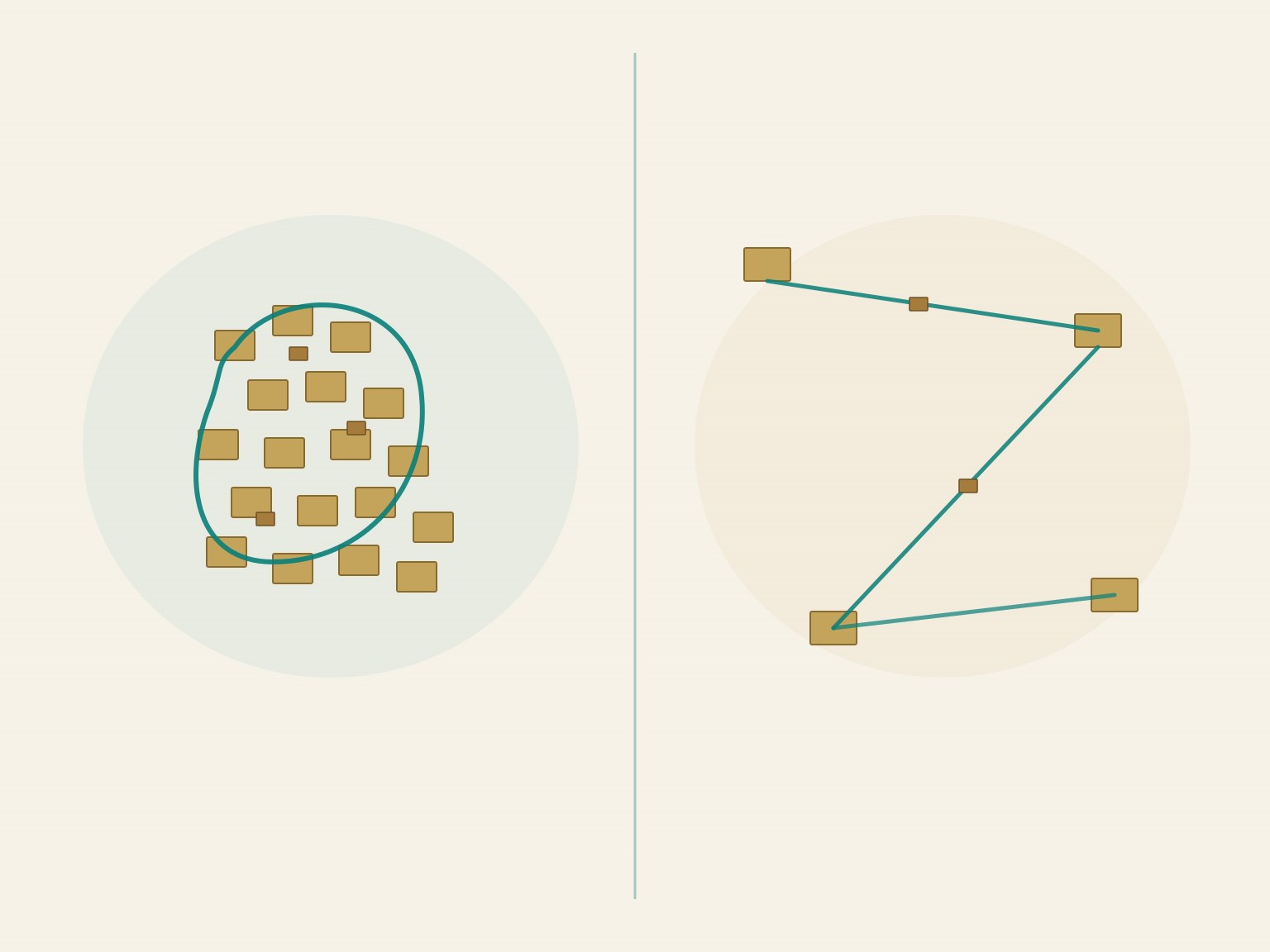
Between those two sentences sit procurement, handling, spoilage, transport, payment and working capital. Operating-model design, not unpublished Twiga metrics, turns on several practical considerations. Route density describes how closely deliveries are clustered and how that clustering affects delivery effort and cost. Repeat orders are evidence of continuing demand. Delivery contribution is revenue remaining after the relevant goods and variable fulfilment costs; it is not company-wide profit. Credit exposure is money at risk when customers receive goods before paying. Exit costs are the obligations and costs of reducing or stopping an initiative.
Wordless two-panel logistics diagram. Left cluster of stalls with a short teal loop. Right sparse stalls with long teal roads. Illustrative operating-model metaphor only.
Documented developments
Public reporting supplies a sequence of commitments and pressures. Read as questions that affordable loss would ask, not as a verdict.
| Documented development | Question raised by affordable loss |
|---|---|
| 2018: Investor DOB Equity reported a US$10 million funding round to expand Twiga’s operations and services. | What evidence should unlock each additional commitment? |
| 2022: Twiga invested US$10 million in commercial farming through Twiga Fresh. | How much additional exposure should the distribution business accept? |
| May 2025: Reporting described a new holding company and more than 300 job cuts during restructuring. | How easily could earlier commitments be unwound? |
| September 2026: Reporting identified GT Flow Limited, formerly Twiga Foods One Limited, as entering administration effective 17 August 2026. | What capacity remained to absorb losses and continue learning? |
2018: Investor DOB Equity reported a US$10 million funding round to expand Twiga’s operations and services.
- Question raised by affordable loss
- What evidence should unlock each additional commitment?
2022: Twiga invested US$10 million in commercial farming through Twiga Fresh.
- Question raised by affordable loss
- How much additional exposure should the distribution business accept?
May 2025: Reporting described a new holding company and more than 300 job cuts during restructuring.
- Question raised by affordable loss
- How easily could earlier commitments be unwound?
September 2026: Reporting identified GT Flow Limited, formerly Twiga Foods One Limited, as entering administration effective 17 August 2026.
- Question raised by affordable loss
- What capacity remained to absorb losses and continue learning?
Sources for the timeline rows: DOB Equity on the 2018 funding report; TechCrunch on commercial farming investment; TechCabal on the May 2025 restructuring; TechCabal on administration reporting.
The reported administration of GT Flow Limited, formerly Twiga Foods One Limited, should not automatically be read as evidence that every Twiga-related entity or operation has closed. Administration is not the same as liquidation, and the public material cited here does not support sweeping legal conclusions about the wider group.
Facts, interpretation and limits
The timeline establishes sequence, not causation. The cited public material does not reveal Twiga’s complete internal records, board deliberations, investment criteria, forecasts or approved loss thresholds. One interpretation, open to contest, is that growing commitments made adaptation more expensive. The same record does not prove that Twiga ignored affordable loss, scaled prematurely, mismanaged funds or breached obligations.
Capital available versus loss affordable
Capital available describes resources secured. Loss affordable describes exposure that can responsibly be absorbed. Fundraising alone does not prove that an operating model can sustain expansion. Warehousing, capacity utilisation and production activities can improve performance while also increasing exposure. Infrastructure may require investment before efficient scale is reached. The discipline is to ask whether each commitment produces sufficient evidence to justify the exposure it creates.
Two vessels on ivory paper: left overflowing, right measured to a careful line. Same amber liquid, different exposure. Illustrative only.

The IFC disclosure also describes later proposed financing structures to support medium-scale contract farming. Proposed facilities and projected programmes are not the same as disbursed equity or achieved operating results; they belong in the ledger of intentions and designs, not of completed outcomes.
Proposed safeguards
The following are illustrative proposals. They are not claims about controls Twiga did or did not possess. They support bounded learning; they do not require immediate company-wide profitability.
| Decision | Proposed affordable loss safeguard |
|---|---|
| Enter a new territory | Set a maximum cash exposure and review date before launch, including the cost of withdrawing. |
| Expand delivery capacity | Test route density, repeat orders and delivery contribution before making larger commitments. |
| Add production activities | Assess the activity separately, including its downside, working-capital requirements and exit costs. |
| Extend retailer credit | Cap credit exposure and monitor collections alongside sales. |
| Continue a weak pilot | Release further funding against defined evidence or a bounded new hypothesis, with a fresh review point. |
Enter a new territory
- Proposed affordable loss safeguard
- Set a maximum cash exposure and review date before launch, including the cost of withdrawing.
Expand delivery capacity
- Proposed affordable loss safeguard
- Test route density, repeat orders and delivery contribution before making larger commitments.
Add production activities
- Proposed affordable loss safeguard
- Assess the activity separately, including its downside, working-capital requirements and exit costs.
Extend retailer credit
- Proposed affordable loss safeguard
- Cap credit exposure and monitor collections alongside sales.
Continue a weak pilot
- Proposed affordable loss safeguard
- Release further funding against defined evidence or a bounded new hypothesis, with a fresh review point.
Delivery path with wooden gateposts and blank chalkboards; crates and small purses on the road. Conceptual proposals for affordable-loss discipline, not documentary.
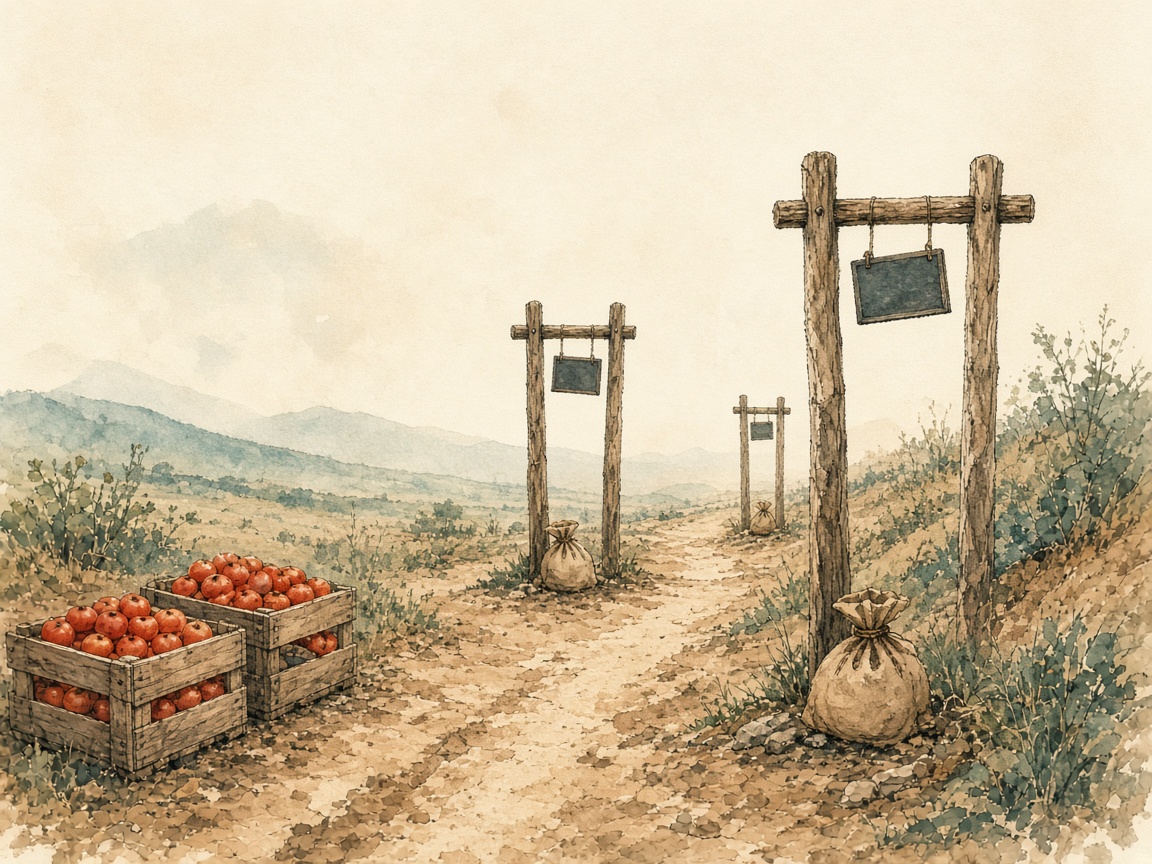
Those gates can be practised in ThePortal’s Corporate Governance Console as a labelled educational fixture: Decision Review surfaces pattern flags; Risk Simulation compounds them; Team Deliberation records dissent; Decision Journal walks the commitment timeline; and Influence Map names who bears exposure.
Affordable to whom?
Diversified investors, employees, suppliers and customers rarely share the same capacity to absorb loss. Whose resources sustain the experiment, and how are their exposures recognised? That stakeholder discussion is an ethical extension of the principle, not a factual finding about Twiga’s treatment of specific people or organisations. This commentary makes no claim about unpaid amounts, individual losses or misconduct.
Four adult figures of different sizes sharing a produce load on a pole. Soft teal and ochre. Ethical metaphor only, not documentary of Twiga stakeholders.

Preserve the capacity to experiment again
Hindsight certainty is a poor teacher. This case does not prove that Twiga’s opportunity lacked value, that substantial investment was inherently mistaken, or that effectuation would certainly have prevented distress. It returns us to a sharper question:
Did each additional commitment produce enough evidence to justify the exposure it created?
Discovery has a price. The durable discipline is to keep that price inside a boundary that preserves the capacity to experiment again, so that the search for a repeatable, scalable model can continue when the first map proves incomplete.
Corporate governance simulation
The Corporate Governance Console turns this commentary into a deliberation exercise, not a reconstruction of Twiga’s private board, not insolvency advice, and not a finding of misconduct. The simulated decision is narrow: bound the next commitment inside an affordable-loss gate before further exposure, with administration of GT Flow Limited treated only as a late, entity-specific inject.
Run the affordable-loss governance simulation in Decision Review, or open the full suite from the Corporate Participation Portal. Quality scores and readiness percentages are workflow signals for deliberation, not certification of solvency, compliance or investment suitability.
Sources
- Effectuation.org: The Five Principles of Effectuation (affordable loss)
- IFC: Summary of Investment Information: Twiga Foods Ltd (project 43108)
- DOB Equity: Twiga Foods raises US$10m from IFC, TLcom (2018 report)
- TechCrunch: Twiga starts commercial farming (15 May 2022)
- TechCabal: Twiga Foods creates holding company, cuts over 300 jobs (24 May 2025)
- TechCabal: Twiga Foods enters administration (14 September 2026)
- Steve Blank: What’s a Startup? First Principles (25 January 2010)
From reading to civic action
Twiga is an educational case on affordable loss, commitment gates and evidence before further exposure. Run the Corporate Governance simulation, or return to the Corporate Portal. Outputs support deliberation; they do not provide insolvency, legal or investment advice, and administration of one reported entity must not be read as automatic group closure.
Improve this article
Ask a question, suggest a correction, submit a source, share experience, or propose a topic. Contact details stay private. Publicly consequential allegations need editorial review.