For Every Answer, There Is a Question
From Best Practice to Next Practice Through the Use Journey
On this page
- The Answer Already on the Table
- The Hidden Question Beneath Every Answer
- The Internet Illuminated Choice
- Platforms Illuminate What Follows
- The Moment of Choice Is Not the Moment of Value
- When the Wrong Question Produces a Convincing Dashboard
- When Best Practice Becomes the Wrong Answer
- Best Practice versus Next Practice
- The Use Journey in Business
- The Use Journey in Public Life
- From Use Journey to Platform Relevance
- Popularity Is Not Relevance
- Relevance Across the Use Journey
- Research, Education and the Courage to Interrogate
- Who Gets to Define the Official Question?
- ThePortal Question Audit
- ThePortal Use Journey Audit
- The Next Practice Test
- ThePortal Platform Relevance Compass
- From Best Practice to Next Practice
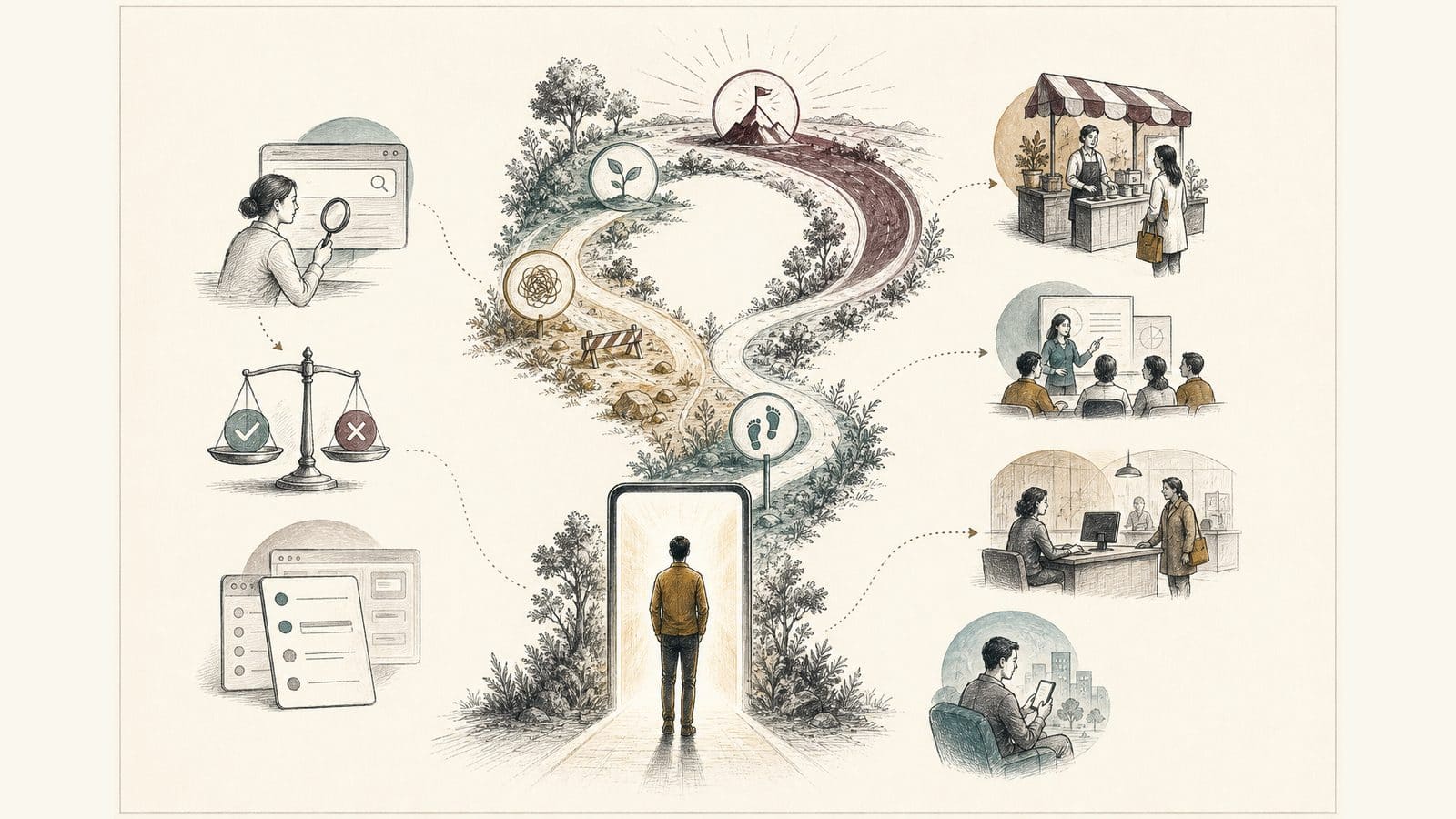
Conceptual editorial image, not a documentary claim about any named place. A person stands at a luminous doorway of choice; behind it a branching Use Journey passes through first use, friction, adaptation and realised value. Left: search and comparison. Right: marketplace, classroom, public desk and mobile platform. Mood: inquiry and lived value on an ivory ground with charcoal line work and restrained burgundy, ochre and teal accents.
The Answer Already on the Table
The strategy is approved. The product is purchased. The citizen has registered. The student has enrolled. The farmer has joined the platform. On the dashboard, the choice looks like victory, often taken as proof that Best Practice worked: green ticks, rising conversion, a completed funnel.
Then morning arrives. Someone opens the app and cannot finish the task. A form refuses an ID number. A loan lands without the working capital rhythm the borrower needed. A public portal loads, and then stranded, the user improvises offline.
The internet illuminated how people discover, compare and choose. Platforms illuminate what happens after the choice. Between those two lights lies the Use Journey, the path from promise to lived value, and the evidence from which Next Practice may emerge. The answer is not the end of the inquiry. It is the beginning of evidence.
Every answer is produced by a question. Every choice is an answer. But that answer remains only a hypothesis until it passes through the experience of use. Best Practice is yesterday’s validated answer. Next Practice begins with the question revealed by today’s Use Journey.
Illustrative boardroom: closed report, cooling cups, departing chairs, one person mid-question. Ivory editorial collage.

The Hidden Question Beneath Every Answer
Answers inherit assumptions, boundaries and blind spots, including answers that later harden into Best Practice. A question is not a neutral doorway; it decides what evidence is collected, whose experience matters, which problems become visible, which options appear possible, how value is defined and what “success” is allowed to mean.
Change the question and the organisation changes what it can see. “How many people chose us?” produces an acquisition dashboard. “What happened after they chose us?” produces a Use Journey. “Did continued use create relevance?” produces the bridge to Next Practice. Choice records an intention. Use reveals reality. Between those sentences sits most of the unfinished work of modern platforms, policies and public services.
The Internet Illuminated Choice
Search, discovery, comparison, reviews, clicks, enquiries, purchases and registrations made parts of the path toward choice newly observable. Organisations gained unprecedented signals about how people find and select answers to their needs, across mobile screens, marketplaces, classified listings and social recommendation.
That visibility is incomplete. Motives, offline influence, kinship advice, cash constraints and social pressure still travel outside the clickstream. A farmer may choose a platform because a neighbour trusted it. A parent may enroll a child because the school gate offered no alternative. The claim is not that choice is fully known. It is that the path toward choice became brighter than it had ever been, and that many institutions stopped celebrating at the glow of conversion.
Platforms Illuminate What Follows
Platforms can observe what follows: onboarding, feature adoption, task completion, repeat use, support requests, payment behaviour, drop-off, renewal, referral and, sometimes, outcome achievement. Consumer-decision research has long treated post-purchase experience as part of an ongoing cycle rather than a quiet afterthought (Court, Elzinga, Mulder & Vetvik on the consumer decision journey).
Here, we call the post-choice passage from promise to lived outcome the Use Journey. It is ThePortal’s analytical emphasis, not a claim that the exact phrase is a settled academic doctrine. A marketing funnel often concentrates on awareness and conversion. A user journey commonly maps the steps required to complete a task. The Use Journey specifically illuminates what happens after a person or institution has chosen: adoption, activation, friction, adaptation, value realisation, continuity, abandonment and feedback.
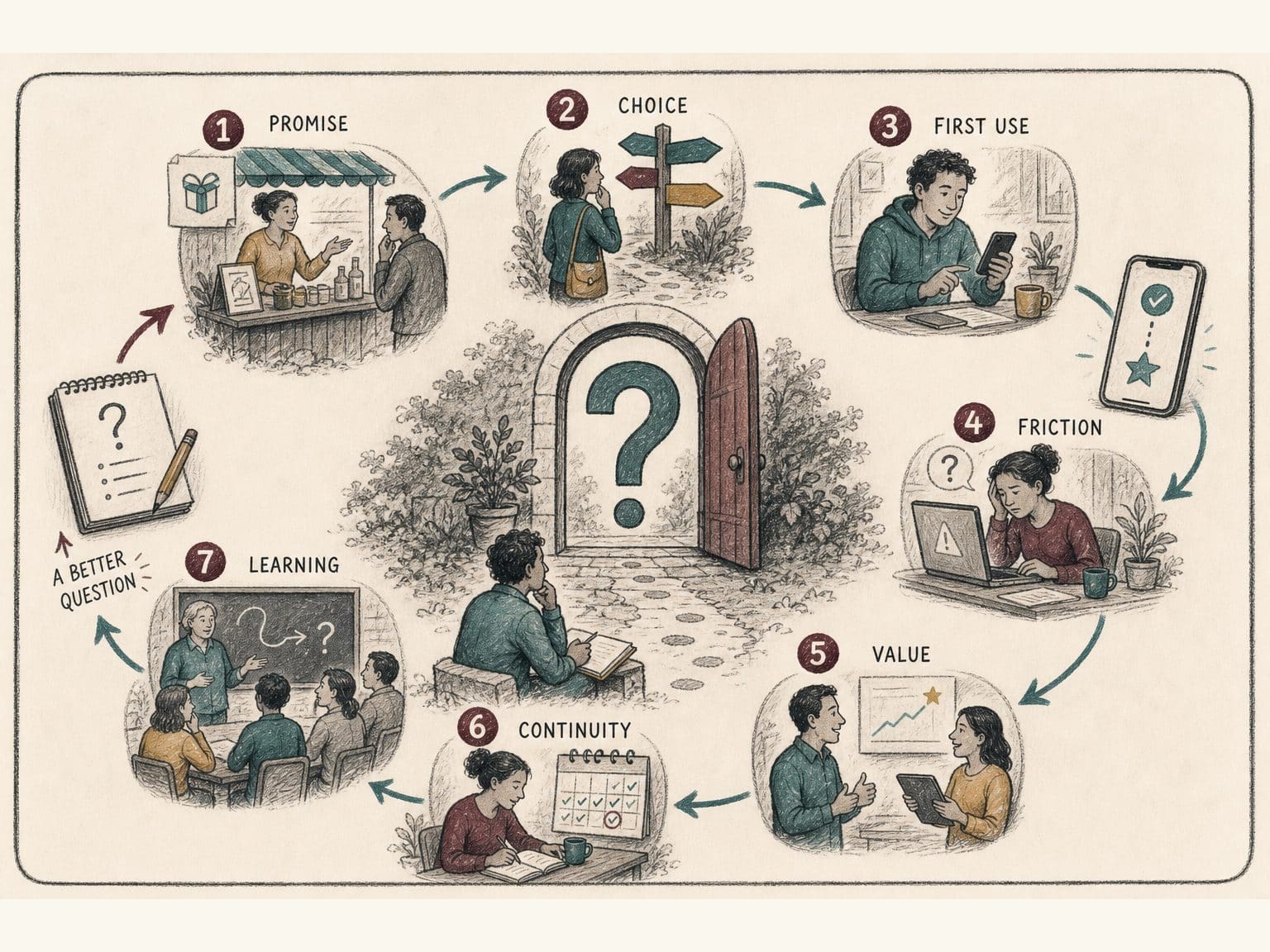
Trace it as seven stations that return to inquiry: Promise, what outcome was offered? Choice, why this answer? First Use, what happened when the promise met reality? Friction, where did people struggle, improvise or disengage? Value Realisation, did a meaningful outcome occur? Continuity or Exit, why did use deepen, weaken or stop? Learning, what should now be questioned and redesigned?
The intellectual cycle is longer than a funnel: Question → Answer → Best Practice → Choice → Use Journey → Evidence → Better Question → Experiment → Next Practice. Through relevance, the evaluative bridge is: Best Practice → Choice → Use Journey → Relevance Evidence → Better Question → Next Practice.
Circular path with seven stations around a question-mark doorway, linking marketplace, classroom, service desk and mobile screen. Illustrative framework visual.
Visibility is not the same as understanding. Data can show where someone stopped without explaining why. Responsible platforms combine behavioural evidence with listening, consent, qualitative inquiry and contextual sense-making. More telemetry does not automatically produce wiser questions, and surveillance aesthetics must not be mistaken for care.
The Moment of Choice Is Not the Moment of Value
A sale is not a solved problem. Registration is not access. Access is not successful use. Enrollment is not learning. A download is not adoption. Attendance is not participation. A loan disbursement is not productive financial inclusion. Policy approval is not improved lived experience.
Left: digital doorway of choice and conversion celebration. Right: morning-after first use with friction and improvisation. Illustrative only.

The transaction proves that a choice was made. The Use Journey reveals whether the promise was kept.
Across marketplaces, classrooms, hospital queues, farm supply chains and mobile screens, the same pattern appears: institutions are fluent at recording the decision and clumsy at following the footprint of use. The dashboard celebrates the click. The Use Journey asks what the click was for, and whether the promise survived contact with reality.
When the Wrong Question Produces a Convincing Dashboard
Wrong questions rarely announce themselves. They arrive as practical KPIs. Contrast acquisition-centred questions with Use Journey questions, illustrative framings, not courtroom cases.
| Conventional question | Better Use Journey question |
|---|---|
| How many people registered? | How many successfully completed the task they came to perform? |
| How many products were sold? | What outcome did the customer achieve after purchase? |
| How many students enrolled? | What capability could they demonstrate afterwards? |
| How many MSMEs received finance? | Did the finance strengthen cash flow, productivity or resilience? |
| How many citizens attended? | Could their contribution materially influence the decision? |
| Why did users abandon the platform? | At what moment did the promise stop matching their reality? |
| How do we increase conversion? | What must happen after conversion for value to become real? |
How many people registered?
- Better Use Journey question
- How many successfully completed the task they came to perform?
How many products were sold?
- Better Use Journey question
- What outcome did the customer achieve after purchase?
How many students enrolled?
- Better Use Journey question
- What capability could they demonstrate afterwards?
How many MSMEs received finance?
- Better Use Journey question
- Did the finance strengthen cash flow, productivity or resilience?
How many citizens attended?
- Better Use Journey question
- Could their contribution materially influence the decision?
Why did users abandon the platform?
- Better Use Journey question
- At what moment did the promise stop matching their reality?
How do we increase conversion?
- Better Use Journey question
- What must happen after conversion for value to become real?
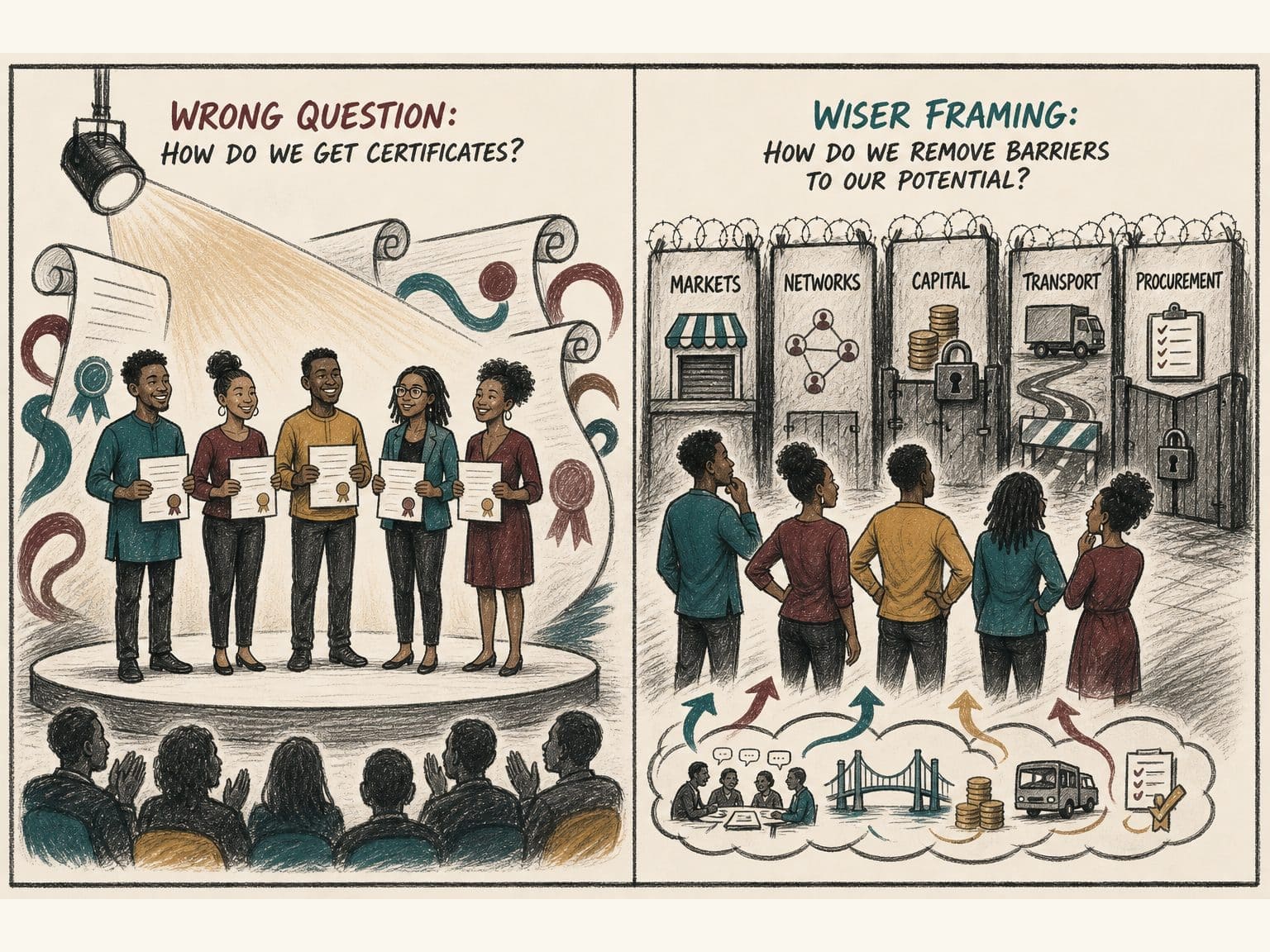
Left: certificate celebration under the wrong question. Right: barriers and wiser framing toward potential. Illustrative only.
When Best Practice Becomes the Wrong Answer
Best Practice is valuable because it remembers. It becomes dangerous when it prevents us from noticing that the world has changed.
Best Practice commonly originates from previous successes, industry benchmarks, professional standards, regulatory requirements, competitor experience, institutional memory and imported operating models. It is accumulated knowledge, often hard-won. Every Best Practice is an answer to an earlier question. It may provide a valuable foundation, benchmark or control. It should not become a permanent substitute for thought.
Problems emerge when organisations copy the visible answer without examining the original question, the conditions under which it worked, the people for whom it was designed, the resources required, the assumptions built into it, and whether those conditions still exist.
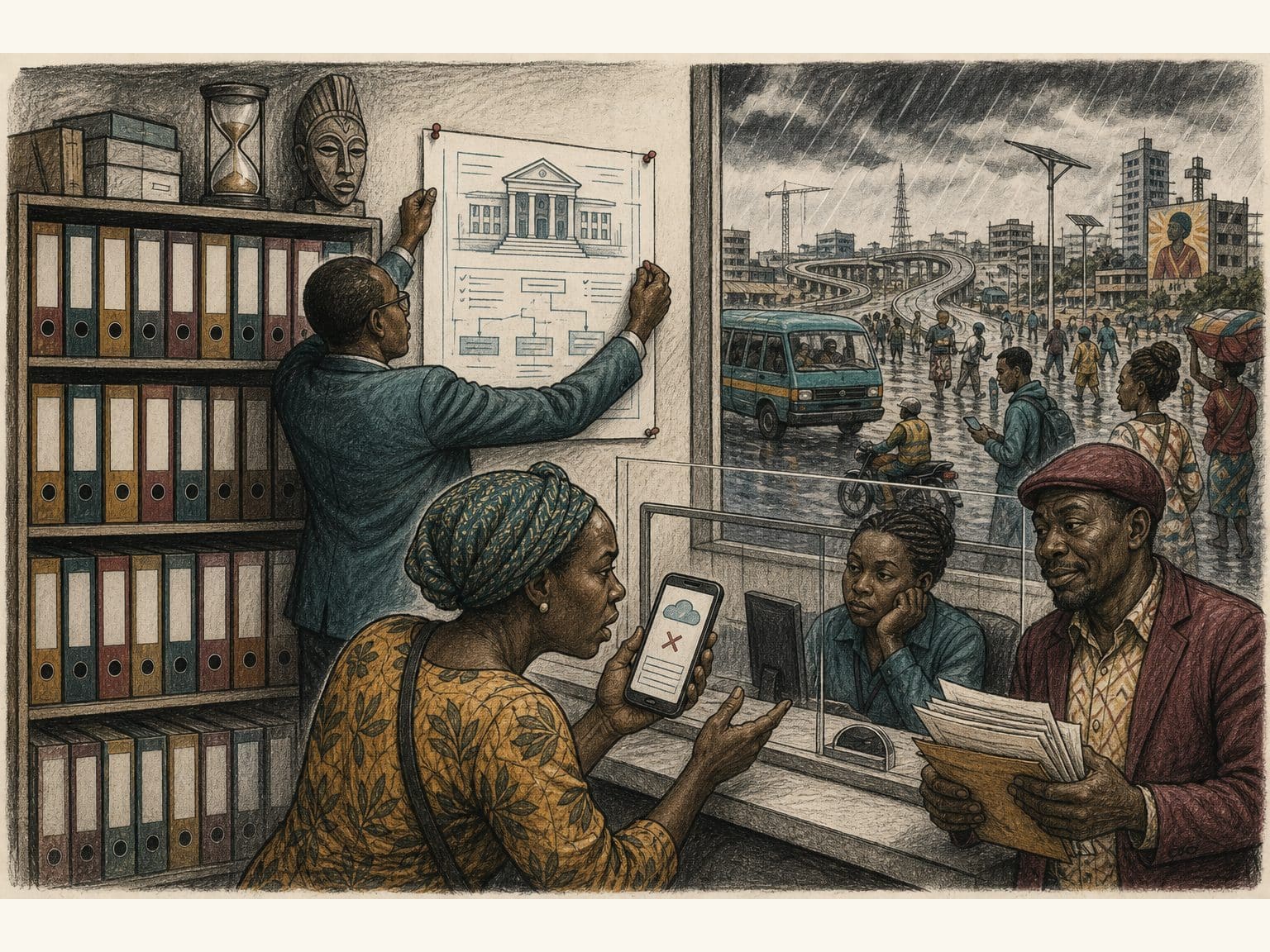
Illustrative scenarios, not verified case studies: a bank may adopt digital onboarding as Best Practice while the Use Journey reveals that customers cannot complete identity verification. A university may treat online enrollment as progress while students struggle to access, navigate or apply the learning. A public institution may digitise a service while citizens still depend on brokers to complete the process. A business may optimise conversion while customers abandon the product before realising value. A development programme may celebrate disbursement while beneficiaries experience repayment pressure without productive returns.
Shelf of institutional memory, copied blueprint, changed world outside, failed digital form at a public counter. Illustrative scene.
Next Practice begins when an organisation asks: What has changed since this became Best Practice? For whom does it work, and who remains excluded? What does the Use Journey reveal that the original designers could not see? Which assumptions no longer survive contact with reality? What should we test next?
Best Practice versus Next Practice
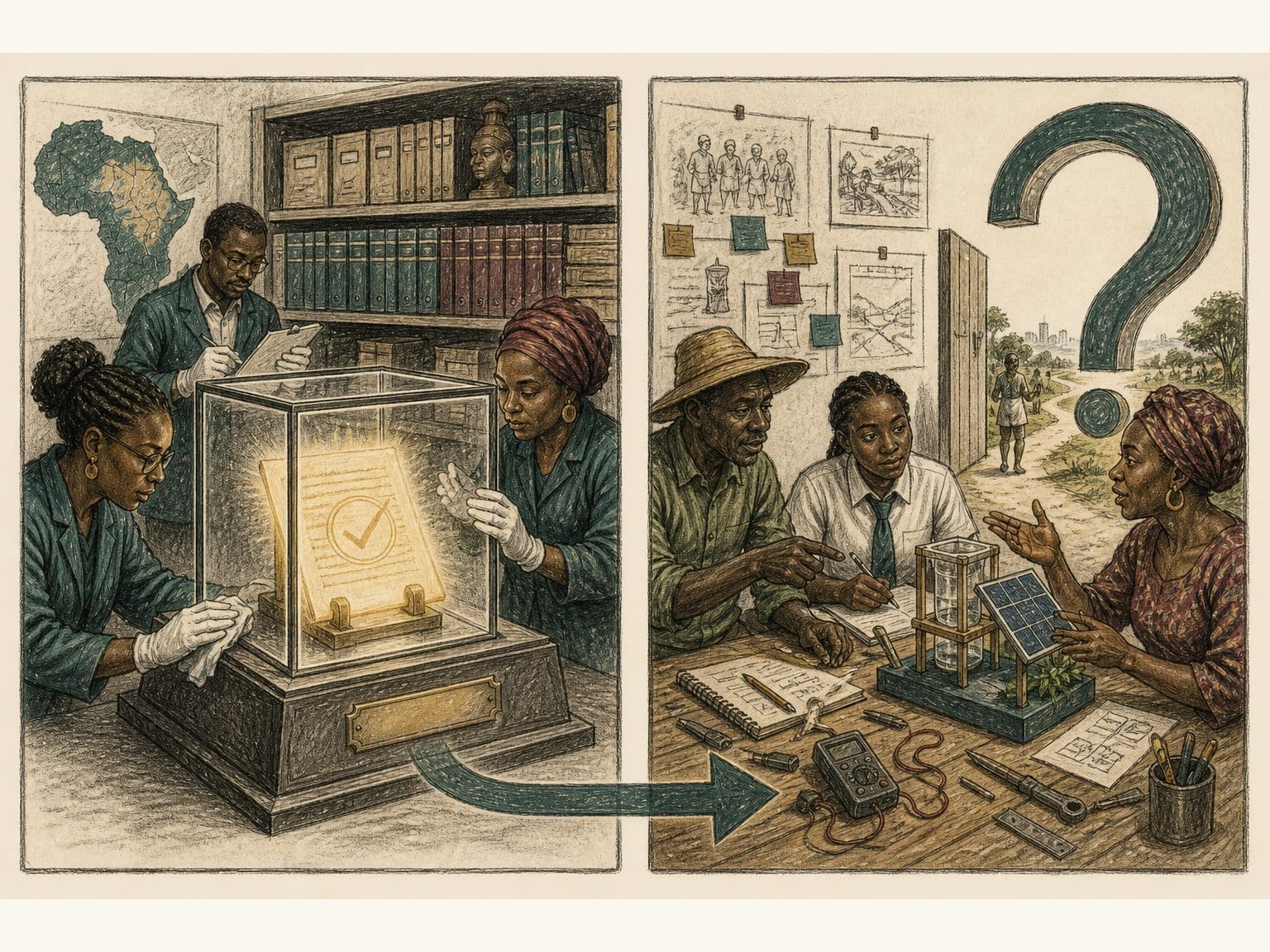
Do not discard Best Practice as obsolete. Build upon it. And do not celebrate novelty for its own sake. Next Practice is not simply a new idea. It is a context-sensitive hypothesis that must earn legitimacy through experimentation, evidence, improved outcomes, and greater relevance in the lived Use Journey.
Left: preserved Best Practice. Right: ethical experiment toward Next Practice through use. Illustrative only.
| Best Practice | Next Practice |
|---|---|
| Learns from what worked before | Learns from what is happening now |
| Provides a proven starting point | Creates a testable future direction |
| Emphasises standards and consistency | Emphasises context and adaptation |
| Asks whether the process was followed | Asks whether the intended value was realised |
| Benchmarks against other institutions | Learns from the actual Use Journey |
| Reduces known risks | Investigates emerging risks |
| Replicates validated answers | Experiments with better questions |
| Measures adoption | Measures outcomes |
| Protects institutional memory | Builds institutional imagination |
Learns from what worked before
- Next Practice
- Learns from what is happening now
Provides a proven starting point
- Next Practice
- Creates a testable future direction
Emphasises standards and consistency
- Next Practice
- Emphasises context and adaptation
Asks whether the process was followed
- Next Practice
- Asks whether the intended value was realised
Benchmarks against other institutions
- Next Practice
- Learns from the actual Use Journey
Reduces known risks
- Next Practice
- Investigates emerging risks
Replicates validated answers
- Next Practice
- Experiments with better questions
Measures adoption
- Next Practice
- Measures outcomes
Protects institutional memory
- Next Practice
- Builds institutional imagination
The Use Journey in Business
Organisations commonly spend heavily on acquisition, advertising, funnels, conversion optimisation and promotions. Durable value more often emerges from activation, successful use, trust, retention, expansion, learning, advocacy, measurable customer outcomes, and relevance across innovation, aspiration, practicality and purpose. A platform that converts brilliantly and delivers poorly is not creating value; it is accelerating disappointment.
The Use Journey asks: Did the customer receive the promised value? How long did realisation take? What friction forced workarounds? Which users benefited and which were excluded by language, device, literacy, geography or cost? What changed in their life or business? Where did relevance strengthen, weaken or disappear? What should be redesigned before the next campaign spends another shilling on the same unanswered question?
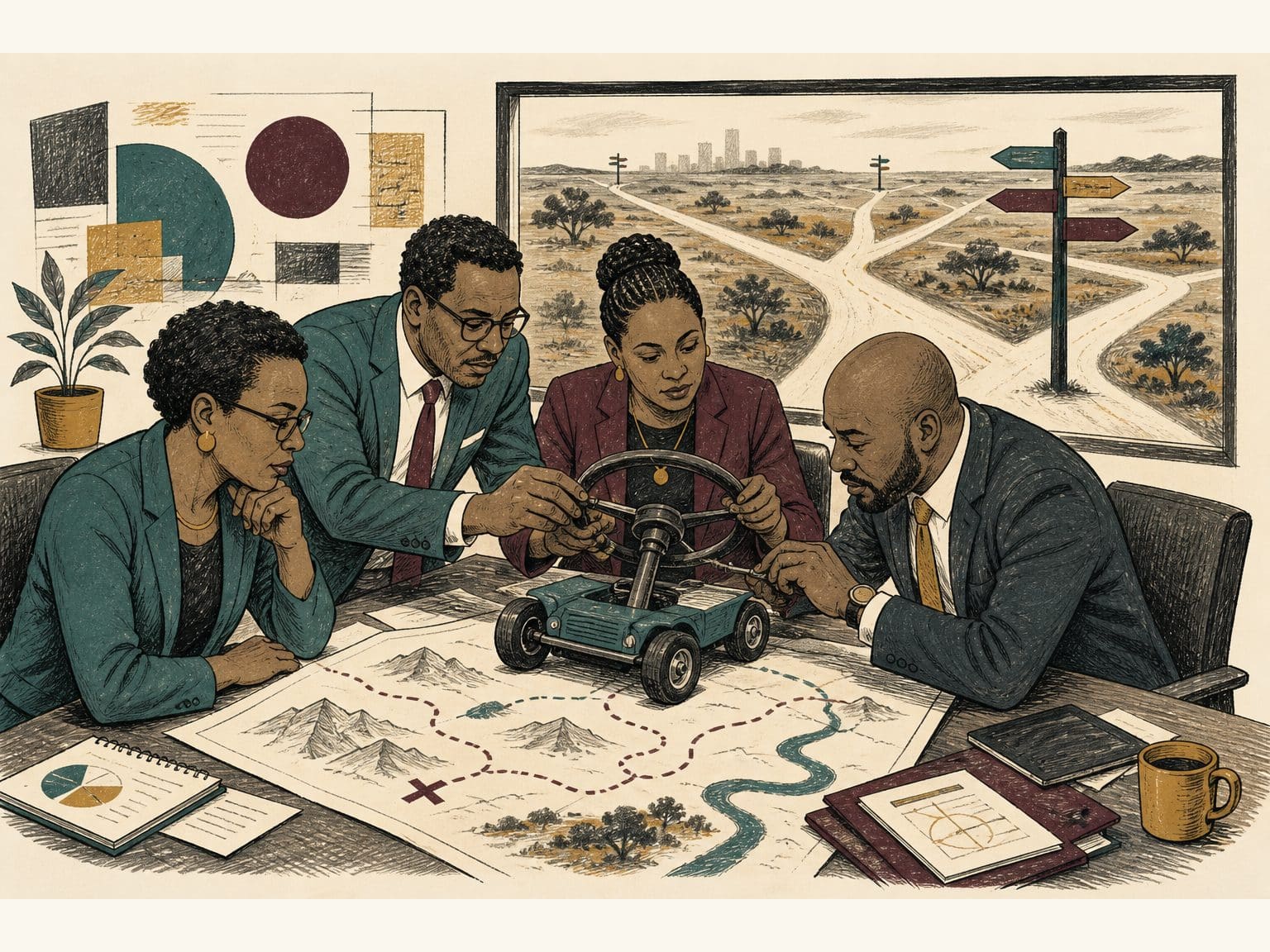
Chris Argyris and Donald Schön described a related organisational discipline: single-loop learning corrects error within existing goals; double-loop learning questions the governing assumptions when those goals are part of the problem (Argyris & Schön on organisational learning). In boardroom language: sometimes you adjust the steering; sometimes you admit you are reading the wrong map, an instinct also at the centre of Real Business Is in Policy.
Boardroom steering wheel and outdated map; landscape outside shows the missed crossroads. Illustrative organisational scene.
The Use Journey in Public Life
The lens travels beyond commerce, into public services, digital government, health, education, agricultural interventions, financial inclusion, public participation, infrastructure and social protection. Institutions should not stop measuring at announcements, registrations, disbursements or attendance. A clinic registration is not a consultation completed. A subsidy paid is not a harvest secured. A road opened is not mobility achieved if the last mile still fails.
Deeper questions: Could people actually use the service? Did they understand it? What hidden costs did they carry, time, transport, intermediaries, lost wages? Whose circumstances made use difficult? Did the intended outcome occur? What unintended consequences emerged? Could feedback change the next version?
Public-service users do not always exercise a free consumer choice. Where systems are mandatory or monopolistic, the Use Journey still matters, but the language of “customer” should not erase power, obligation and rights. Citizens may be stuck with the only available answer; that makes post-choice evidence more urgent, not less.
From Use Journey to Platform Relevance
Ordinary platforms can attract choice. Highly relevant platforms become consequential in people’s lives. ThePortal’s Platform Relevance Compass paraphrases four drivers of that difference, without claiming a verified source attribution until publication details are confirmed:
- Innovation relevance, continually improving the approach and benefits experienced by users.
- Aspirational relevance, becoming meaningfully connected to what users hope to achieve or become.
- Practical relevance, solving consequential customer problems with disciplined pragmatism.
- Purpose relevance, connecting with the customer’s values, identity and sense of meaning.
These four dimensions are the evaluative bridge between the Use Journey and Next Practice. Best Practice supplies a proven starting point. Choice shows that the promise attracted the customer. The Use Journey reveals what the customer actually experienced. The Relevance Test determines whether that experience created practical, personal, innovative and purpose-driven value. Better questions expose the gap between the promise and the outcome. Next Practice redesigns the platform around the evidence.
A platform becomes relevant not merely when customers choose it, but when continued use helps them solve an important problem, advance an aspiration, experience meaningful innovation or express something they value.
Left: busy hollow engagement. Right: lived relevance across problem-solving, aspiration and purpose. Illustrative framework visual.

Popularity Is Not Relevance
Visibility is not relevance. Acquisition is not relevance. Engagement is not automatically relevance. Convenience alone may not create enduring relevance. Relevance emerges when the platform becomes consequential to the user’s problem, aspiration, values or purpose.
A platform may record frequent activity while creating little meaningful value. Conversely, a platform used less frequently may be highly relevant when it performs an important function at a critical moment. Platform success should therefore combine behavioural metrics with evidence of customer outcomes.
Customers may choose a platform because of its promise. They remain because it becomes relevant to their problems, aspirations, values or purpose.
Relevance Across the Use Journey
Map the relevance questions onto each station of the Use Journey. The Learning stage is where Next Practice must be earned, not invented for novelty’s sake.
| Use Journey stage | Relevance question |
|---|---|
| Promise | Which practical, aspirational or purpose-driven value is being offered? |
| Choice | Which part of the promise motivated the decision? |
| First use | Does the actual experience confirm the promise? |
| Friction | Where does the platform become less useful, inclusive or meaningful? |
| Value realisation | What changed for the user? |
| Continuity or exit | Why did relevance strengthen, weaken or disappear? |
| Learning | What Next Practice should the evidence produce? |
Promise
- Relevance question
- Which practical, aspirational or purpose-driven value is being offered?
Choice
- Relevance question
- Which part of the promise motivated the decision?
First use
- Relevance question
- Does the actual experience confirm the promise?
Friction
- Relevance question
- Where does the platform become less useful, inclusive or meaningful?
Value realisation
- Relevance question
- What changed for the user?
Continuity or exit
- Relevance question
- Why did relevance strengthen, weaken or disappear?
Learning
- Relevance question
- What Next Practice should the evidence produce?
Research, Education and the Courage to Interrogate
Research does not merely provide answers; it tests the questions used to organise evidence. The Use Journey shifts attention from declared intention to experienced outcome: from “Was the technology adopted?” to “How was it incorporated into daily practice?”; from “Did participants complete the training?” to “What could they do differently afterwards?”; from “Was the programme implemented?” to “How did implementation alter the lives of intended beneficiaries?”
Education that rewards only memorised answers trains compliance. Education that develops the courage to interrogate assumptions, evidence and consequences trains craft and citizenship, an argument developed at length in Mzungu Research vs Mwafrika Research.
Who Gets to Define the Official Question?
Official questions are framed by governments, boards, experts, investors, consultants, technology companies, development institutions and media organisations. Those who live the Use Journey often hold evidence the designers never saw: the workaround at the counter, the unpaid helper who completed the form, the feature abandoned after the third failed attempt, and whether Best Practice still fits or a candidate Next Practice creates relevance.
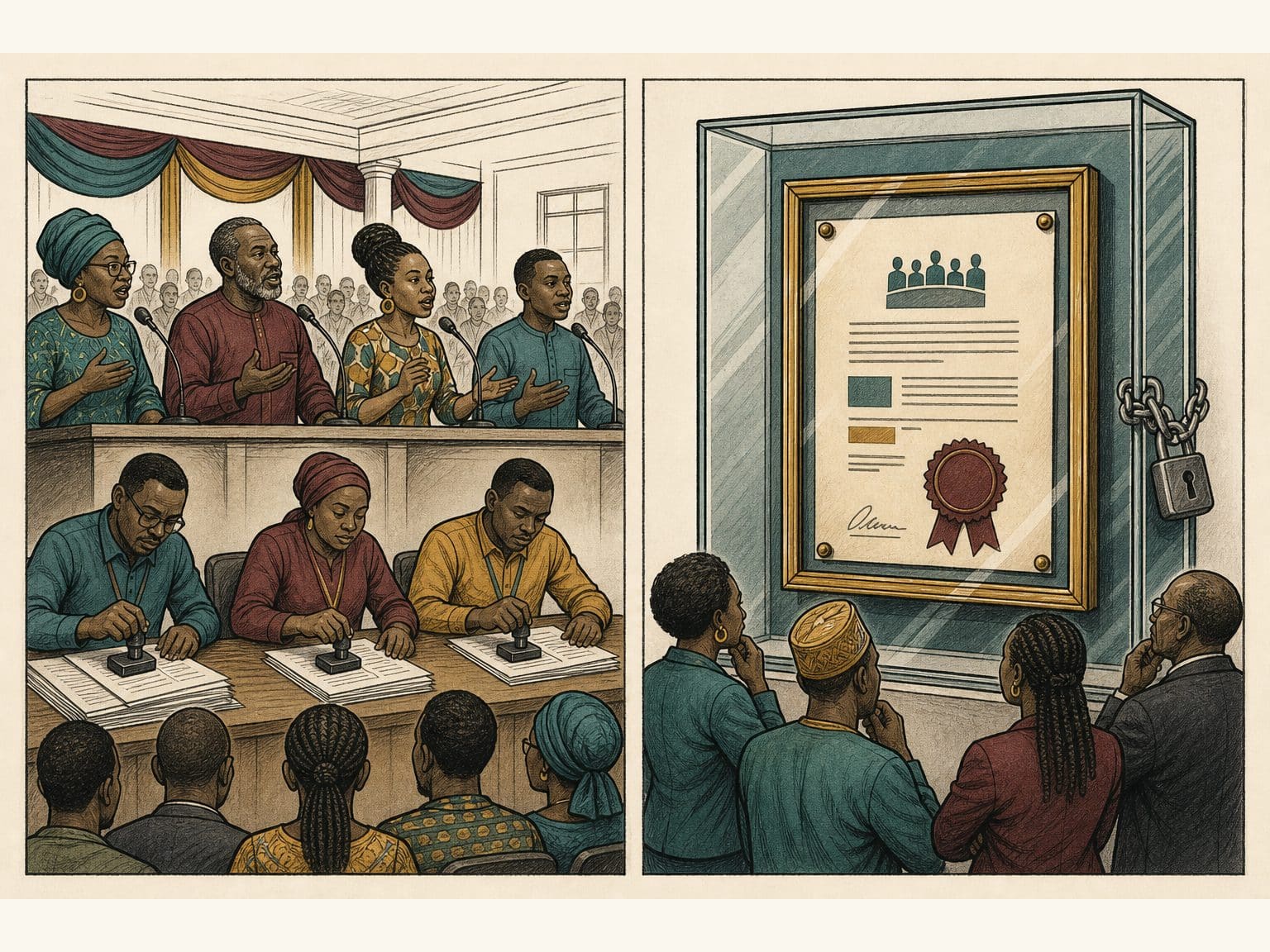
Kenya’s Constitution names public participation among the nation’s values and principles of governance (Constitution of Kenya, 2010). Participation that permits comment on an answer but forbids questioning the problem definition, options, success measures or the distribution of costs becomes theatre, a theme explored in convivial democracy.
Left: public meeting and attendance stamps. Right: locked official question and sealed decision. Illustrative civic scene.
ThePortal Question Audit
Place any strategy, policy, product or accepted answer through these questions:
- What exact question produced this answer?
- Who framed the question, and who was absent?
- Which assumptions are being treated as facts?
- What evidence supports or challenges the answer?
- Who benefits, who carries the cost and whose experience is missing?
- What new evidence would justify changing our minds?
- What better question could open a better possibility?
ThePortal Use Journey Audit
For any product, service, programme or policy, ask:
- What promise was made before the choice?
- What motivated the choice?
- What happened during first use?
- Where did friction, improvisation or exclusion occur?
- What value did the person actually realise?
- Why did use continue, deepen, weaken or stop?
- What evidence came from behaviour and what came from listening?
- What should be redesigned?
- What new question has the Use Journey revealed?
The Next Practice Test
Before describing any innovation as Next Practice, require it to pass these questions. Next Practice is not whatever is newest. It is whatever creates greater relevance in the customer’s lived Use Journey.
- What limitation of the current Best Practice has the Use Journey revealed?
- Whose lived experience provides the evidence?
- What changed in the surrounding environment?
- Which assumption are we now challenging?
- What alternative practice are we proposing?
- How will it be tested safely and ethically?
- What measurable outcome would make it better?
- What evidence would cause us to abandon or revise it?
- Can the learning be transferred without ignoring context?
ThePortal Platform Relevance Compass
Evaluate every platform, service, programme or emerging Next Practice through four dimensions:
Innovation
Does the platform improve how value is created or delivered, and is that improvement visible in the Use Journey, not only in marketing?
Aspiration
What is the user trying to become or achieve, and does the platform help them progress, even if its technology becomes invisible?
Practicality
What consequential problem does it solve, how quickly is value realised, and where are people still forced to improvise or abandon?
Purpose
Does the platform respect dignity and identity, strengthen agency rather than dependency, and match the purpose its brand claims?
1. Innovation
- Does the platform improve how value is created or delivered?
- Is the innovation visible in the user’s experience?
- Does it eliminate friction or merely introduce more features?
- Is the improvement pervasive across the Use Journey or confined to marketing?
2. Aspiration
- What is the user ultimately trying to achieve?
- Does the platform help the user progress towards that ambition?
- Is success defined by platform activity or by improvement in the user’s life, work or enterprise?
- Would the platform still matter if its technology became invisible?
3. Practicality
- What consequential problem does the platform solve?
- How quickly does the user realise value?
- Where are users forced to improvise, seek intermediaries or abandon the process?
- Does the proposed Next Practice solve the problem more effectively than the inherited Best Practice?
4. Purpose
- Does the platform respect the user’s values, dignity and identity?
- Does it strengthen agency or create dependency?
- Can users understand and influence how the platform affects them?
- Does the platform’s conduct support the purpose expressed by its brand?
From Best Practice to Next Practice
The internet illuminated how customers choose. Platforms illuminate what happens after they choose. The Use Journey reveals whether the choice created relevance. That evidence is what allows institutions to move from Best Practice to Next Practice.
Best Practice remembers what worked. The Use Journey reveals what is happening. The Relevance Compass explains why it matters. Better questions expose what must change. Next Practice converts the learning into a testable new answer.
The internet made choice more visible. Platforms make use more observable. The Use Journey turns that observation into evidence. Better questions transform the evidence into Next Practice. Best Practice tells us what has worked. The Use Journey tells us what is happening. Better questions tell us what is missing. Next Practice helps us discover what could work next.
For every answer, there is a question. For every Best Practice, there was once an experiment. And within every Use Journey lies the evidence from which the next practice may emerge.
The future will not be built by institutions that merely repeat yesterday’s answers. It will be built by those capable of learning from use, questioning intelligently and converting lived evidence into Next Practice.
Is your platform merely being chosen, or is it becoming meaningfully relevant in the lives and aspirations of the people who use it?
What evidence from the Use Journey should now move your organization from Best Practice to Next Practice?
Sources and further reading
- Court, Elzinga, Mulder & Vetvik: “The consumer decision journey” (McKinsey) (accessed 24 August 2026)
- Infed: Chris Argyris: theories of action, double-loop learning and organisational learning (accessed 24 August 2026)
- Constitution of Kenya, 2010: Kenya Law (accessed 24 August 2026)
From reading to civic action
Best Practice remembers what worked; the Use Journey reveals whether it still creates relevance. Listen for lived evidence, then document the challenge that should move your institution toward Next Practice.
Improve this article
Ask a question, suggest a correction, submit a source, share experience, or propose a topic. Contact details stay private. Publicly consequential allegations need editorial review.